Buying Guide for the Best UV Flatbed Printers
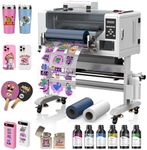
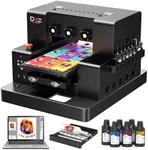
Choosing the right UV flatbed printer can be a daunting task, but with the right approach, you can find a model that perfectly fits your needs. UV flatbed printers are versatile machines used for printing on a variety of materials, including wood, glass, metal, and plastic. They are ideal for businesses that require high-quality, durable prints. To make an informed decision, you need to consider several key specifications that will determine the printer's performance and suitability for your specific applications.Print SizePrint size refers to the maximum dimensions of the material that the printer can handle. This is important because it determines the range of projects you can undertake. Smaller print sizes (e.g., 24x36 inches) are suitable for small-scale items like phone cases and promotional products. Medium print sizes (e.g., 48x96 inches) are ideal for signage and medium-sized displays. Larger print sizes (e.g., 60x120 inches) are necessary for large-format applications like billboards and large panels. Choose a print size based on the largest item you plan to print regularly.
Print ResolutionPrint resolution is measured in dots per inch (DPI) and indicates the level of detail the printer can achieve. Higher resolutions (e.g., 1440 DPI and above) produce finer details and smoother gradients, which are essential for high-quality images and detailed graphics. Lower resolutions (e.g., 600 DPI) are sufficient for text and simple graphics. If your work requires high-definition prints, such as photographic reproductions or fine art, opt for a higher resolution. For basic signage and less detailed work, a lower resolution will suffice.
Ink TypeUV flatbed printers use UV-curable inks that are cured using ultraviolet light. The type of ink can affect the durability, flexibility, and color gamut of your prints. Standard UV inks are suitable for rigid materials and provide excellent durability. Flexible UV inks are better for materials that need to bend or stretch, such as vinyl or fabric. Specialty inks, like white or clear, can add unique effects and are useful for specific applications. Consider the types of materials you will be printing on and the desired durability and flexibility when choosing the ink type.
Print SpeedPrint speed is measured in square feet per hour (sq ft/hr) and indicates how quickly the printer can produce prints. Faster print speeds are beneficial for high-volume production environments where time is critical. Slower print speeds may be acceptable for lower volume or high-detail work where quality is more important than speed. If you need to produce large quantities of prints quickly, look for a printer with a higher print speed. For detailed, high-quality prints where speed is less of a concern, a slower print speed may be acceptable.
Material CompatibilityMaterial compatibility refers to the range of materials the printer can handle. Some UV flatbed printers are designed to print on a wide variety of substrates, including wood, glass, metal, plastic, and more. Others may be limited to specific types of materials. Consider the types of projects you plan to undertake and ensure the printer you choose can handle those materials. If you need versatility, look for a printer with broad material compatibility. If you have a specific material in mind, ensure the printer is optimized for that material.
Software and ConnectivityThe software and connectivity options of a UV flatbed printer can affect its ease of use and integration into your workflow. User-friendly software with features like design tools, color management, and print queue management can streamline your printing process. Connectivity options, such as USB, Ethernet, and Wi-Fi, determine how you can connect the printer to your computer or network. Choose a printer with software that meets your design and production needs and connectivity options that fit your setup. This will ensure a smooth and efficient printing process.