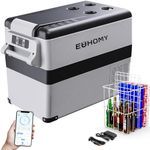
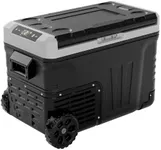
Buying Guide for the Best Truckers' Refrigerators
Choosing the right refrigerator for your truck is essential to ensure that your food and beverages stay fresh during long hauls. When selecting a trucker's refrigerator, it's important to consider several key specifications that will impact its performance, convenience, and suitability for your needs. Understanding these specs will help you make an informed decision and find the best fit for your lifestyle on the road.Size and CapacitySize and capacity refer to the physical dimensions of the refrigerator and the amount of storage space it offers. This is important because you need to ensure that the refrigerator fits in the available space in your truck and provides enough room to store your food and drinks. Sizes can range from compact models that fit under a seat to larger units that take up more space. Consider how much food you typically need to store and measure the space in your truck to find the right size.
Power SourceThe power source of a trucker's refrigerator determines how it operates and stays cool. Common options include 12V DC power, which plugs into your truck's cigarette lighter, and AC power, which requires an inverter. Some models can switch between both. It's important to choose a refrigerator that matches your truck's power setup and your access to power sources. If you spend a lot of time on the road, a 12V DC model might be more convenient.
Cooling TechnologyCooling technology refers to the method the refrigerator uses to keep items cold. The two main types are compressor-based and thermoelectric. Compressor refrigerators are more efficient and can maintain lower temperatures, making them suitable for storing perishable items. Thermoelectric models are quieter and lighter but may struggle in very hot environments. Consider the types of food you plan to store and the climates you drive through to choose the right cooling technology.
Temperature ControlTemperature control allows you to set and maintain the desired temperature inside the refrigerator. This is important for keeping different types of food at their optimal storage temperatures. Some refrigerators offer adjustable thermostats, while others have preset temperature settings. If you need to store a variety of items, look for a model with precise temperature control to ensure your food stays fresh.
Durability and Build QualityDurability and build quality refer to how well the refrigerator can withstand the rigors of life on the road. A sturdy, well-built refrigerator will last longer and perform better under the vibrations and bumps of truck travel. Look for models with reinforced corners, strong hinges, and high-quality materials. If you frequently drive on rough roads, prioritize durability to avoid breakdowns and ensure reliable performance.
Energy EfficiencyEnergy efficiency measures how much power the refrigerator uses to keep items cold. This is important for conserving your truck's battery power and reducing fuel consumption. Energy-efficient models will have better insulation and advanced cooling systems that use less power. If you spend long periods without access to external power sources, an energy-efficient refrigerator will help you maintain your food supply without draining your battery.
Noise LevelNoise level refers to how much sound the refrigerator makes while operating. This is important for ensuring a comfortable and quiet environment in your truck, especially if you sleep in the cab. Compressor models tend to be noisier than thermoelectric ones. If you are sensitive to noise or need a quiet sleeping space, look for a refrigerator with a low noise level rating.
Additional FeaturesAdditional features can enhance the convenience and functionality of your refrigerator. These might include things like adjustable shelves, removable bins, interior lighting, and digital displays. While not essential, these features can make it easier to organize and access your food. Consider which additional features would be most useful for your needs and look for models that offer them.