Buying Guide for the Best Swimming Pool Dehumidifiers
Choosing the right swimming pool dehumidifier is crucial for maintaining a comfortable and healthy environment around your indoor pool. A dehumidifier helps control humidity levels, preventing mold growth, structural damage, and ensuring the air quality is safe for swimmers. When selecting a dehumidifier, consider the size of your pool area, the humidity levels, and the specific features that will best suit your needs.CapacityCapacity refers to the amount of moisture a dehumidifier can remove from the air in a day, usually measured in pints or liters. This is important because it determines how effectively the dehumidifier can control the humidity in your pool area. For small pool areas, a dehumidifier with a lower capacity (20-30 pints per day) may be sufficient. Medium-sized areas might require a capacity of 30-50 pints per day, while large pool areas or commercial settings may need a dehumidifier with a capacity of 50+ pints per day. To pick the right capacity, consider the size of your pool area and the average humidity levels.
Airflow (CFM)Airflow, measured in cubic feet per minute (CFM), indicates how much air the dehumidifier can process. This is important because higher airflow means the dehumidifier can cover a larger area more effectively. For small to medium pool areas, a dehumidifier with an airflow of 150-300 CFM may be adequate. Larger areas may require a unit with 300+ CFM. To choose the right airflow, consider the size of your pool area and how quickly you need the air to be dehumidified.
Energy EfficiencyEnergy efficiency measures how much energy the dehumidifier uses to remove moisture from the air. This is important because a more energy-efficient unit will save you money on electricity bills and is better for the environment. Look for dehumidifiers with an Energy Star rating or those that specify low energy consumption. To pick the right one, consider how often you will be using the dehumidifier and the potential energy costs.
Noise LevelNoise level, measured in decibels (dB), indicates how loud the dehumidifier will be when operating. This is important because a quieter unit will be less disruptive, especially if the pool area is used for relaxation or social activities. Dehumidifiers typically range from 40-60 dB. For a quieter environment, look for units on the lower end of this range. To choose the right noise level, consider the location of the dehumidifier and how much noise you are willing to tolerate.
Drainage OptionsDrainage options refer to how the dehumidifier disposes of the collected water. This is important because it affects the convenience and maintenance of the unit. Some dehumidifiers have a built-in pump for automatic drainage, while others may require manual emptying or have a gravity drain option. To pick the right drainage option, consider how often you can manually empty the unit or if you prefer a more automated solution.
Control FeaturesControl features include the settings and functionalities available on the dehumidifier, such as humidistats, timers, and remote controls. This is important because it allows you to customize the operation of the dehumidifier to suit your needs. Look for units with easy-to-use controls and features that match your preferences, such as digital displays, programmable timers, and automatic shut-off. To choose the right control features, consider how much control and convenience you want over the dehumidifier's operation.
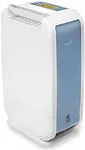
Size and PortabilitySize and portability refer to the physical dimensions and ease of moving the dehumidifier. This is important because it affects where you can place the unit and how easily you can relocate it if needed. Smaller, portable units are ideal for limited spaces or if you need to move the dehumidifier between different areas. Larger, stationary units may be better for permanent installations in large pool areas. To pick the right size and portability, consider the available space and whether you need a fixed or movable solution.