Buying Guide for the Best Standing Desk Balance Boards
Choosing the right standing desk balance board can significantly enhance your comfort and productivity while working. These boards are designed to keep you moving and engaged, helping to improve your posture, balance, and overall health. When selecting a balance board, it's important to consider several key specifications to ensure you find the best fit for your needs. Understanding these specs will help you make an informed decision and get the most out of your purchase.SizeThe size of a balance board refers to its dimensions, including length, width, and thickness. This spec is important because it affects how much space you have to move and how stable you feel while using the board. Smaller boards are more portable and can be easier to store, but they may offer less stability. Larger boards provide more room for movement and can be more stable, but they take up more space. To pick the right size, consider your workspace and how much room you have for the board, as well as your personal preference for stability and movement.
Weight CapacityWeight capacity indicates the maximum weight the balance board can support. This is crucial for ensuring the board can safely hold your weight without breaking or becoming unstable. Balance boards typically have weight capacities ranging from 200 to 400 pounds. To choose the right weight capacity, make sure it comfortably exceeds your body weight. If you plan to use the board with additional weights or equipment, factor that into your decision as well.
MaterialThe material of a balance board affects its durability, comfort, and grip. Common materials include wood, plastic, and composite materials. Wooden boards are often more durable and provide a natural feel, but they can be heavier. Plastic boards are lighter and more portable, but they may not be as durable. Composite materials offer a balance of durability and weight. To pick the right material, consider how you plan to use the board, how often you'll be moving it, and your preference for feel and durability.
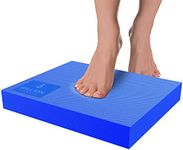
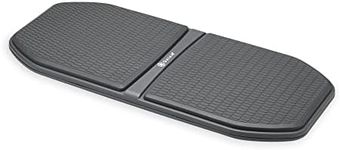
Surface TextureSurface texture refers to the top layer of the balance board where you place your feet. This spec is important for grip and comfort. Some boards have a smooth surface, while others have a textured or cushioned surface. A textured surface can provide better grip and prevent slipping, which is important for safety. A cushioned surface can add comfort, especially if you plan to use the board for long periods. To choose the right surface texture, think about your comfort preferences and how much grip you need to feel secure.
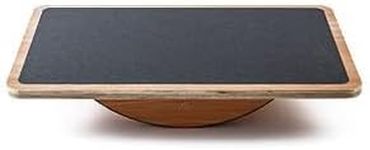
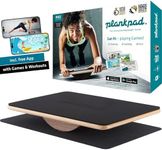
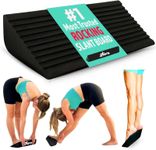
Balance MechanismThe balance mechanism is how the board creates instability to engage your muscles. Common mechanisms include wobble, rocker, and spring systems. Wobble boards have a rounded base that allows for 360-degree movement, providing a high level of instability. Rocker boards have a curved base that allows for forward and backward or side-to-side movement, offering moderate instability. Spring systems use springs to create a bouncing effect, providing dynamic movement. To pick the right balance mechanism, consider your balance skill level and how much challenge you want. Beginners may prefer rocker boards, while more advanced users might enjoy the challenge of a wobble or spring system.
PortabilityPortability refers to how easy it is to move and store the balance board. This is important if you plan to use the board in different locations or need to store it when not in use. Lighter boards and those with handles or carrying cases are more portable. To choose the right level of portability, think about where you'll be using the board and how often you'll need to move it. If you need to transport it frequently, look for a lighter, more portable option.