Buying Guide for the Best Stand Mixers With Attachments
When it comes to picking the right stand mixer with attachments, it's important to consider your specific needs and preferences. Stand mixers are versatile kitchen appliances that can make baking and cooking much easier. They come with various attachments that can perform different tasks, so understanding what each spec means and how it fits into your cooking routine is crucial. Here are some key specifications to consider when choosing a stand mixer with attachments.Power (Wattage)The power of a stand mixer is measured in watts and indicates how strong the motor is. This spec is important because a more powerful motor can handle tougher doughs and larger batches without straining. Stand mixers typically range from 250 to 1000 watts. For light tasks like whipping cream or mixing cake batter, a mixer with lower wattage (250-500 watts) is sufficient. For heavier tasks like kneading bread dough or mixing large quantities, a higher wattage (500-1000 watts) is recommended. Consider what types of recipes you will be making most often to determine the right power level for you.
Bowl CapacityThe bowl capacity of a stand mixer is measured in quarts and determines how much mixture you can prepare at once. This spec is important because it affects the volume of ingredients you can mix without overflowing. Stand mixers typically have bowl capacities ranging from 3 to 7 quarts. For small households or occasional baking, a smaller bowl (3-4 quarts) may be sufficient. For larger families or frequent bakers, a larger bowl (5-7 quarts) is more suitable. Think about the quantity of food you usually prepare to choose the right bowl size.
Speed SettingsSpeed settings on a stand mixer allow you to control how fast the attachments move. This spec is important because different recipes require different mixing speeds for optimal results. Stand mixers usually have 3 to 12 speed settings. For basic mixing tasks, fewer speed settings (3-6) may be adequate. For more precise control over mixing, especially for delicate recipes, more speed settings (7-12) are beneficial. Consider the variety of recipes you plan to make and how much control you need over the mixing process.
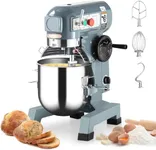
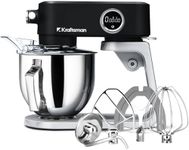
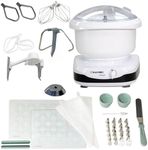
AttachmentsAttachments are additional tools that can be connected to the stand mixer to perform various tasks like kneading, whisking, and grinding. This spec is important because it determines the versatility of the mixer. Common attachments include dough hooks, wire whisks, and flat beaters. Some mixers also offer optional attachments like pasta makers, meat grinders, and spiralizers. If you plan to use the mixer for a wide range of tasks, look for a model with multiple attachments. Think about the specific tasks you want to accomplish and choose a mixer that comes with or is compatible with the necessary attachments.
Build Quality and MaterialsThe build quality and materials of a stand mixer affect its durability and performance. This spec is important because a well-built mixer will last longer and perform better. Stand mixers are typically made from plastic, metal, or a combination of both. Metal mixers are generally more durable and stable, while plastic mixers are lighter and easier to move. Consider how often you will use the mixer and how important durability is to you. If you plan to use it frequently, a metal mixer may be a better investment.
Ease of CleaningEase of cleaning refers to how simple it is to clean the mixer and its attachments after use. This spec is important because it affects the convenience of using the mixer. Some mixers have dishwasher-safe parts, while others require hand washing. Look for mixers with smooth surfaces and minimal crevices where food can get stuck. Consider how much time you are willing to spend on cleaning and choose a mixer that fits your preference for maintenance.