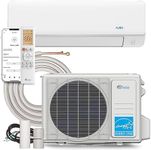
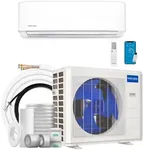
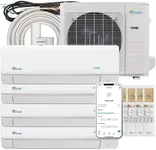
Buying Guide for the Best Split Unit Air Conditioners
Choosing the right split-unit air conditioner can make a significant difference in your comfort and energy bills. Split-unit air conditioners are popular for their efficiency and ability to cool specific areas of your home. When selecting the best model for your needs, it's important to consider several key specifications. Understanding these specs will help you make an informed decision and ensure you get the best performance for your space.Cooling Capacity (BTU)Cooling capacity, measured in British Thermal Units (BTU), indicates how much heat an air conditioner can remove from a room per hour. This spec is crucial because it determines the unit's ability to cool a specific area. Generally, the higher the BTU, the larger the space it can cool. For small rooms (up to 150 square feet), a unit with 5,000-6,000 BTU is sufficient. Medium-sized rooms (150-300 square feet) require 7,000-8,000 BTU, while larger rooms (300-450 square feet) need 10,000-12,000 BTU. For very large spaces, you might need a unit with 14,000 BTU or more. Choose a unit with the appropriate BTU for your room size to ensure efficient cooling without wasting energy.
Energy Efficiency Ratio (EER)The Energy Efficiency Ratio (EER) measures the efficiency of an air conditioner by comparing its cooling capacity to its power consumption. A higher EER indicates a more efficient unit, which can save you money on energy bills. EER values typically range from 8 to 12. For optimal energy savings, look for a unit with an EER of 10 or higher. If you live in a region with high electricity costs or plan to use the air conditioner frequently, prioritizing a higher EER can be beneficial.
Noise LevelNoise level, measured in decibels (dB), indicates how loud the air conditioner will be during operation. This is important for maintaining a comfortable and quiet environment, especially in bedrooms or living areas. Noise levels for split-unit air conditioners typically range from 19 dB (very quiet) to 60 dB (moderate noise). For a peaceful environment, look for units with noise levels below 30 dB. If noise is less of a concern, you can consider units with higher dB ratings.
Airflow RateThe airflow rate, measured in cubic feet per minute (CFM), indicates how much air the unit can circulate. This spec is important for ensuring even cooling throughout the room. Higher CFM values mean more air movement, which can be beneficial for larger spaces or rooms with poor air circulation. For small to medium rooms, a CFM of 300-400 is usually sufficient. For larger rooms, look for units with a CFM of 400 or higher. Choose a unit with an appropriate airflow rate to ensure effective cooling and air distribution.
Inverter TechnologyInverter technology allows the air conditioner to adjust its compressor speed based on the cooling demand, leading to more efficient and consistent temperature control. This technology is important because it can significantly reduce energy consumption and provide a more comfortable environment. Units with inverter technology are generally more efficient and quieter than those without. If you prioritize energy efficiency and consistent cooling, look for models with inverter technology.
Installation and MaintenanceProper installation and regular maintenance are crucial for the optimal performance of your split-unit air conditioner. This includes ensuring the indoor and outdoor units are correctly positioned and that the refrigerant levels are adequate. Some units come with features that make installation and maintenance easier, such as washable filters and self-cleaning functions. Consider how easy it is to install and maintain the unit, especially if you plan to do it yourself. If you prefer minimal maintenance, look for models with user-friendly features.