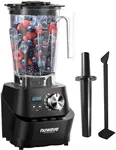
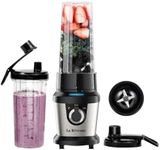
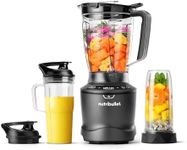
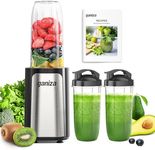
Buying Guide for the Best Smoothie Blender
Choosing the right smoothie blender can make a big difference in your daily routine, especially if you love making smoothies, shakes, or other blended drinks. The right blender will be powerful enough to handle your favorite ingredients, easy to clean, and durable enough to last for years. To find the best fit for you, it's important to consider several key specifications. Understanding these specs will help you make an informed decision and ensure you get a blender that meets your needs.Power (Wattage)Power, measured in watts, indicates how strong the blender's motor is. This is important because a more powerful motor can handle tougher ingredients like ice, frozen fruits, and fibrous vegetables more easily. Blenders typically range from 200 to 1500 watts. For basic smoothies with soft fruits, a blender with 300-600 watts may suffice. If you plan to blend harder ingredients or want smoother textures, look for a blender with 700-1000 watts. For heavy-duty use, such as making nut butters or crushing ice regularly, consider a blender with over 1000 watts.
Blade DesignThe design and quality of the blades are crucial for efficient blending. Blades can be made from stainless steel or other durable materials. Look for blenders with multiple blades positioned at different angles, as this helps create a vortex that pulls ingredients down for thorough blending. Some blenders have removable blades for easier cleaning. If you plan to blend a variety of ingredients, including tough ones, opt for a blender with strong, sharp, and well-designed blades.
Jar Material and CapacityBlender jars come in different materials, such as plastic, glass, and stainless steel. Plastic jars are lightweight and less likely to break, but they can absorb odors and stains. Glass jars are heavier and more durable, but they can break if dropped. Stainless steel jars are durable and don't retain odors, but you can't see the contents while blending. Capacity is also important; jars typically range from 32 ounces to 64 ounces or more. Choose a jar size based on how much you plan to blend at once. For single servings, a smaller jar is sufficient, while larger jars are better for family-sized portions.
Speed SettingsBlenders come with different speed settings, ranging from simple on/off functions to multiple speed options. More speed settings give you greater control over the texture of your blend. Basic blenders may have 2-3 speeds, which are sufficient for most tasks. More advanced models can have up to 10 speeds or more, allowing for finer adjustments. If you like experimenting with different recipes and textures, a blender with multiple speed settings will be more versatile.
Pulse FunctionThe pulse function allows you to blend in short bursts at high speed, giving you more control over the blending process. This is useful for chopping ingredients coarsely or for quickly mixing ingredients without over-blending. If you like making chunky salsas or need to crush ice without turning it into slush, a pulse function is a valuable feature to have.
Ease of CleaningCleaning your blender should be quick and easy, especially if you use it frequently. Look for blenders with dishwasher-safe parts, such as the jar, lid, and blades. Some blenders have self-cleaning functions, where you add water and a drop of dish soap, then run the blender to clean it. Removable blades can also make cleaning easier. If you want to save time and effort, prioritize blenders that are easy to disassemble and clean.
Noise LevelBlenders can be quite noisy, which might be a concern if you have a household with light sleepers or if you prefer a quieter kitchen. Noise levels can vary significantly between models. Some blenders are designed with noise-reducing technology to operate more quietly. If noise is a major concern for you, look for blenders that are specifically marketed as quiet or have user reviews mentioning low noise levels.
Durability and WarrantyA durable blender will last longer and provide better value over time. Check the materials used in the construction of the blender, such as high-quality plastics or metals. A good warranty can also give you peace of mind, as it indicates the manufacturer's confidence in their product. Warranties can range from one year to several years. If you plan to use your blender frequently, look for models with longer warranties and positive reviews regarding their durability.