Buying Guide for the Best Small Room Air Purifiers
Choosing the right air purifier for a small room can make a big difference in your air quality and overall comfort. When shopping for a small-room air purifier, it's important to focus on how well it removes airborne particles and allergens, how suitable it is for your room size, how noisy it is, and how easy it is to maintain. Thinking about your own needs—like if you have allergies, pets, or sensitivity to noise—will help you narrow down your choices and find the model that best fits your daily life.Clean Air Delivery Rate (CADR)The Clean Air Delivery Rate, or CADR, measures how quickly and effectively an air purifier can clean the air of dust, pollen, and smoke. It's important because it gives you a sense of how powerful the air purifier is. CADR values are usually given separately for each particle type. For small rooms, you'll often see lower CADR numbers, but that's alright since the space is smaller. If your room is very small (like a bedroom or office under 150 square feet), a lower CADR may be sufficient, while slightly higher CADR is better for spaces up to 300 square feet. Match the CADR to your room size for optimal performance—higher CADR means quicker cleaning, but for small rooms, you don't need the highest values.
Room Size CoverageRoom size coverage tells you the maximum area (in square feet or square meters) that the air purifier is intended to clean efficiently. This is crucial because using a purifier that's too small for your space will reduce its effectiveness. Manufacturers often specify this value. For an accurate match, measure your room and choose a purifier rated for a little more square footage than your actual room size. For example, if your room is 120 square feet, a unit rated for up to 150 square feet is a safe bet, ensuring it can keep up with your air cleaning needs.
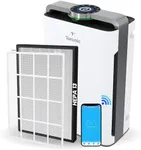
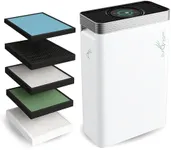
Filter TypeThe filter type determines what kinds of particles and pollutants the air purifier can capture. The most common filter is a HEPA filter, excellent for removing dust, pollen, and pet dander. Some purifiers add activated carbon filters to remove odors and gases. There are purifiers with UV lights or ionizers, but HEPA and activated carbon are the most reliable and safest for regular home use. If you suffer from allergies, a true HEPA filter is a must. For pet odors, smoke, or kitchen smells, look for a unit with both HEPA and activated carbon filtering.
Noise LevelNoise level is how loud the purifier is when it's running, measured in decibels (dB). This matters if you plan to use the air purifier in a bedroom, office, or study area. Noise levels can range from whisper-quiet to noticeable hums or fans. Purifiers with low dB ratings (below 30 dB) are very quiet and suitable for bedrooms, while higher ratings (40-50 dB) might be more acceptable for living rooms or less noise-sensitive areas. Consider your tolerance for background noise and where you will place the device—choose quieter models for sleeping or working.
Maintenance and Filter ReplacementMaintenance involves cleaning the unit and changing filters regularly. This is important for keeping the air purifier effective and prolonging its lifespan. Some air purifiers have filter replacement indicators, which can be helpful. Filters have different lifespans—some need replacement every 3 months, others every 6-12 months. Consider how often you're willing to maintain your device; if you want minimal hassle, look for longer-lasting filters and easy-access compartments for replacements.
Energy EfficiencyEnergy efficiency describes how much electricity the air purifier uses while running. Since air purifiers often operate for hours or even all day, choosing an energy-efficient model will save you on electricity costs and reduce your environmental footprint. Purifiers labeled as energy efficient or certified for low energy use are best if you know you'll have the unit running frequently. For occasional use, this might be less important, but for everyday operation, it's wise to choose a model that sips power.