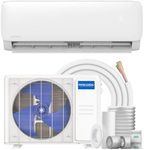
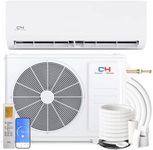
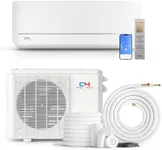
Buying Guide for the Best Single Zone Mini Split Systems
Choosing the right single-zone mini-split system can significantly improve your comfort at home or in a specific area. These systems are designed to heat or cool one particular zone, making them ideal for individual rooms or small spaces. When selecting a mini-split system, it's important to consider several key specifications to ensure you get the best fit for your needs. Understanding these specs will help you make an informed decision and ensure optimal performance and efficiency.BTU CapacityBTU (British Thermal Units) capacity measures the amount of heat the system can remove or add to a room per hour. This spec is crucial because it determines the system's ability to effectively heat or cool your space. BTU capacity typically ranges from 6,000 to 36,000 BTUs. For small rooms (up to 300 sq ft), a lower BTU capacity (6,000-12,000 BTUs) is sufficient. Medium-sized rooms (300-600 sq ft) require a mid-range capacity (12,000-18,000 BTUs), while larger rooms (600-1,000 sq ft) need higher capacities (18,000-36,000 BTUs). Choose a BTU capacity that matches the size of your room to ensure efficient performance.
SEER RatingSEER (Seasonal Energy Efficiency Ratio) rating measures the efficiency of the cooling system over a typical cooling season. A higher SEER rating indicates better energy efficiency, which can lead to lower energy bills. SEER ratings usually range from 13 to 25. Systems with a SEER rating of 13-16 are considered standard efficiency, while ratings of 17-20 are high efficiency, and 21-25 are ultra-high efficiency. If you live in a region with hot summers or plan to use the system frequently, opting for a higher SEER rating can be beneficial for long-term savings.
HSPF RatingHSPF (Heating Seasonal Performance Factor) rating measures the efficiency of the heating system over a typical heating season. Similar to SEER, a higher HSPF rating indicates better energy efficiency. HSPF ratings typically range from 8 to 12. Systems with an HSPF rating of 8-9 are standard efficiency, while ratings of 10-12 are high efficiency. If you live in a colder climate or plan to use the heating function frequently, choosing a system with a higher HSPF rating can help reduce heating costs.
Noise LevelNoise level is measured in decibels (dB) and indicates how loud the system will be during operation. This spec is important for ensuring a comfortable and quiet environment. Noise levels for mini-split systems typically range from 19 dB to 55 dB. Systems with noise levels below 30 dB are considered very quiet, suitable for bedrooms or living rooms. Noise levels between 30-40 dB are moderate and acceptable for most spaces, while levels above 40 dB may be noticeable and better suited for areas where noise is less of a concern. Consider the placement of the system and your sensitivity to noise when choosing the right noise level.
Installation TypeInstallation type refers to how the indoor unit of the mini-split system is mounted. Common types include wall-mounted, ceiling cassette, floor-mounted, and ducted units. Wall-mounted units are the most popular and versatile, suitable for most rooms. Ceiling cassette units are ideal for spaces with limited wall space and provide even air distribution. Floor-mounted units are great for rooms with low ceilings or where wall mounting is not possible. Ducted units are hidden within the ceiling or walls and are best for maintaining aesthetics. Choose the installation type based on your room layout and aesthetic preferences.
Control OptionsControl options refer to how you can operate the mini-split system. Common options include remote control, smartphone app, and integration with smart home systems. Remote control is standard and convenient for basic operation. Smartphone apps offer advanced features like scheduling, energy monitoring, and remote access. Integration with smart home systems allows for voice control and automation. Consider your preference for convenience and technology when selecting control options.