Buying Guide for the Best RV Propane Detectors
Choosing the right RV propane detector is crucial for ensuring your safety while traveling or living in your recreational vehicle. Propane detectors are designed to alert you to the presence of propane gas, which can be dangerous if it leaks. When selecting a propane detector, it's important to consider several key specifications to ensure you get the best fit for your needs. Understanding these specifications will help you make an informed decision and keep your RV safe.SensitivitySensitivity refers to the detector's ability to detect propane gas at low concentrations. This is important because early detection can prevent dangerous situations. Sensitivity is usually measured in parts per million (ppm). Detectors with higher sensitivity can detect lower levels of propane, providing an earlier warning. If you want maximum safety, choose a detector with high sensitivity. However, if you are in an environment where minor leaks are common and not dangerous, a lower sensitivity might be sufficient.
Power SourceThe power source of a propane detector can be either battery-operated or hardwired into your RV's electrical system. Battery-operated detectors are easy to install and can be placed anywhere, but they require regular battery changes. Hardwired detectors are more reliable as they are constantly powered, but installation can be more complex. If you prefer convenience and flexibility, a battery-operated detector might be best. For a more permanent and maintenance-free solution, consider a hardwired detector.
Alarm VolumeAlarm volume is the loudness of the alarm sound when propane is detected. This is important to ensure that you can hear the alarm even if you are sleeping or in a different part of the RV. Alarm volume is usually measured in decibels (dB). Louder alarms (85 dB or more) are better for larger RVs or if you have hearing difficulties. For smaller RVs or if you are sensitive to loud noises, a lower volume alarm might be sufficient.
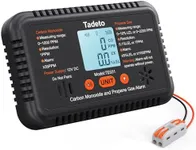
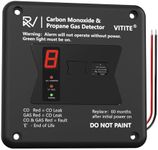
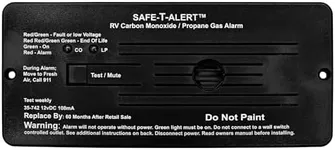
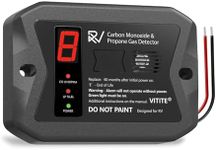
Display and IndicatorsSome propane detectors come with digital displays and indicators that show the concentration of propane gas and the status of the detector. This feature is important for easily monitoring the safety levels in your RV. Detectors with clear displays and indicators can provide more information and peace of mind. If you prefer to have detailed information at a glance, choose a detector with a digital display. If simplicity is more important, a basic model with indicator lights might be enough.
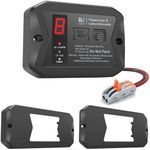
Installation and MountingThe ease of installation and mounting options are important to consider for convenience and effectiveness. Some detectors are designed for wall mounting, while others can be placed on a flat surface. Proper placement is crucial for accurate detection. If you are not handy with tools, look for a detector that is easy to install with clear instructions. For those who want a more integrated look, a wall-mounted detector might be preferable.
Certification and ComplianceCertification and compliance with safety standards ensure that the propane detector meets certain safety and performance criteria. Look for detectors that are certified by recognized organizations such as Underwriters Laboratories (UL). This is important for ensuring the reliability and effectiveness of the detector. Always choose a detector that meets or exceeds safety standards to ensure maximum protection.