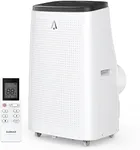
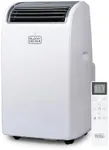
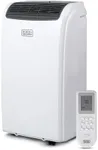
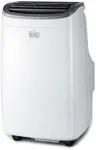
Buying Guide for the Best Rolling Air Conditioners
When choosing a rolling air conditioner, it's important to consider several key specifications to ensure you select the best model for your needs. Rolling air conditioners are portable units that can be moved from room to room, providing flexibility and convenience. To make an informed decision, you should understand the various features and how they impact performance and usability.Cooling Capacity (BTU)Cooling capacity, measured in British Thermal Units (BTU), indicates how much heat the air conditioner can remove from a room per hour. This is crucial because it determines the size of the room the unit can effectively cool. Units with lower BTU ratings (5,000-8,000 BTU) are suitable for small rooms up to 300 square feet, while mid-range units (8,000-12,000 BTU) can handle medium-sized rooms up to 500 square feet. Higher BTU ratings (12,000-14,000 BTU) are ideal for larger rooms or open spaces up to 700 square feet. To pick the right one, consider the size of the room you intend to cool and choose a unit with an appropriate BTU rating.
Energy Efficiency Ratio (EER)The Energy Efficiency Ratio (EER) measures the air conditioner's efficiency by comparing the cooling capacity (BTU) to the power consumption (watts). A higher EER indicates a more efficient unit, which can save you money on energy bills. EER values typically range from 8 to 12. For better energy savings, look for units with an EER of 10 or higher. If you plan to use the air conditioner frequently, investing in a higher EER model can be beneficial in the long run.
Noise LevelNoise level, measured in decibels (dB), indicates how loud the air conditioner will be during operation. This is important for maintaining a comfortable environment, especially in bedrooms or living areas. Noise levels for rolling air conditioners typically range from 50 to 70 dB. Units with noise levels below 55 dB are considered quiet and are suitable for bedrooms or offices. If noise is not a major concern, you can opt for units with higher noise levels. Consider where you will be using the air conditioner and choose a model with an acceptable noise level for that space.
Size and PortabilityThe size and portability of a rolling air conditioner affect how easily you can move it between rooms and store it when not in use. Smaller, lighter units are easier to maneuver and are ideal for frequent relocation. Larger units may offer more cooling power but can be cumbersome to move. Look for models with built-in handles and caster wheels for easier transportation. Consider your need for portability and choose a unit that balances size, weight, and ease of movement.
Dehumidification FunctionMany rolling air conditioners come with a dehumidification function, which removes excess moisture from the air. This is important for maintaining a comfortable indoor environment, especially in humid climates. The dehumidification capacity is measured in pints per hour. Units with higher dehumidification capacities can remove more moisture, making them suitable for damp areas. If you live in a humid area or have issues with excess moisture, look for a model with a strong dehumidification function.
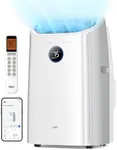
Control OptionsControl options refer to how you can operate the air conditioner, including remote controls, digital displays, and smart connectivity. These features enhance convenience and ease of use. Remote controls allow you to adjust settings from a distance, while digital displays provide clear information about the current settings. Some models offer smart connectivity, enabling you to control the unit via a smartphone app or voice commands. Consider your preference for convenience and choose a model with control options that suit your lifestyle.
Maintenance and Filter TypeMaintenance and filter type are important for ensuring the air conditioner operates efficiently and provides clean air. Most rolling air conditioners have washable or replaceable filters that capture dust and allergens. Washable filters are cost-effective and easy to clean, while replaceable filters may offer better filtration but require periodic replacement. Regular maintenance, such as cleaning the filter and emptying the water tank, is essential for optimal performance. Consider your willingness to perform maintenance tasks and choose a model with a filter type that matches your preferences.