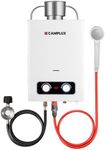
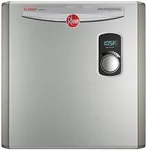
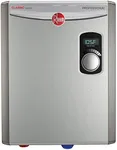
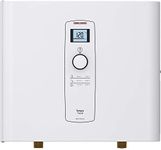
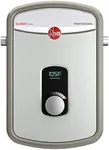
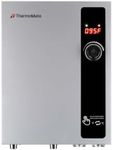
Buying Guide for the Best Residential Tankless Electric Hot Water Heaters
Choosing the right residential tankless electric hot water heater can significantly impact your home's comfort and energy efficiency. Tankless water heaters provide hot water on demand, which means you won't run out of hot water and you can save on energy costs. However, selecting the right model involves understanding several key specifications to ensure it meets your household's needs. Here’s a guide to help you navigate through the essential specs and make an informed decision.Flow Rate (GPM)Flow rate, measured in gallons per minute (GPM), indicates how much hot water the unit can produce at a given time. This is crucial because it determines whether the heater can meet your household's hot water demands. For example, a small household with one or two people might need a flow rate of 3-4 GPM, while a larger household with multiple showers and appliances running simultaneously might require 6-8 GPM or more. Assess your peak hot water usage to choose the right flow rate.
Temperature RiseTemperature rise refers to the difference between the incoming water temperature and the desired output temperature. This is important because it affects the heater's ability to provide sufficiently hot water. If you live in a colder climate where the incoming water is very cold, you'll need a unit capable of a higher temperature rise. Conversely, in warmer climates, a lower temperature rise may be sufficient. Consider your local water temperature and your preferred hot water temperature to determine the necessary temperature rise.
Power (kW)The power rating, measured in kilowatts (kW), indicates the electrical power the unit requires to heat the water. Higher kW ratings generally mean the unit can heat water more quickly and handle higher flow rates. For smaller households or less demanding applications, a lower kW rating (around 10-18 kW) may be adequate. Larger households or those with higher hot water demands might need a unit with a higher kW rating (20-36 kW). Match the power rating to your hot water needs and ensure your home's electrical system can support it.
Energy EfficiencyEnergy efficiency measures how effectively the unit converts electrical energy into hot water. This is important for reducing energy consumption and lowering utility bills. Look for units with high energy efficiency ratings, often expressed as a percentage. Models with efficiency ratings of 90% or higher are considered very efficient. Choosing a high-efficiency model can lead to significant savings over time, especially if you have high hot water usage.
Installation RequirementsInstallation requirements include the electrical and space considerations needed to install the unit. This is important because it affects the feasibility and cost of installation. Tankless electric water heaters typically require a dedicated circuit and specific voltage and amperage. Ensure your home's electrical system can accommodate these requirements. Additionally, consider the physical space where the unit will be installed; tankless units are generally compact, but you need to ensure proper ventilation and access for maintenance.
WarrantyThe warranty covers the unit against defects and malfunctions for a specified period. This is important for protecting your investment and ensuring long-term reliability. Warranties can vary significantly, with some offering coverage for 5 years and others for up to 10 years or more. Consider the length and terms of the warranty when choosing a unit, as a longer warranty can provide peace of mind and potential savings on repairs.