Buying Guide for the Best Rechargeable Soldering Irons
Choosing the right rechargeable soldering iron can make a significant difference in your soldering projects, whether you're a hobbyist or a professional. A good soldering iron should be reliable, easy to use, and suitable for the type of work you plan to do. Here are some key specifications to consider when selecting a rechargeable soldering iron, along with explanations to help you make an informed decision.Battery LifeBattery life refers to how long the soldering iron can operate on a single charge. This is important because it determines how long you can work without needing to recharge. Battery life can range from 30 minutes to several hours. If you plan to use the soldering iron for extended periods or on large projects, look for a model with a longer battery life. For occasional or small tasks, a shorter battery life may be sufficient.
Heat-Up TimeHeat-up time is the duration it takes for the soldering iron to reach its operating temperature. This is crucial because a faster heat-up time means you can start working sooner. Heat-up times can vary from a few seconds to a couple of minutes. If you need to work quickly or frequently switch the iron on and off, a model with a rapid heat-up time is ideal. For less time-sensitive projects, a longer heat-up time may be acceptable.
Temperature ControlTemperature control allows you to adjust the heat of the soldering iron to suit different tasks. This is important because different materials and components require different temperatures for effective soldering. Some soldering irons have fixed temperatures, while others offer adjustable settings. If you work with a variety of materials, an iron with adjustable temperature control is beneficial. For simpler tasks, a fixed temperature model may suffice.
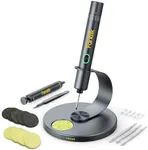
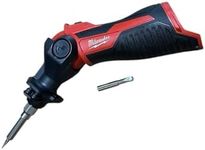
Tip Variety and CompatibilityThe variety and compatibility of tips refer to the different shapes and sizes of soldering tips that can be used with the iron. This is important because different tasks may require different tip shapes for precision and efficiency. Some soldering irons come with interchangeable tips, while others have fixed tips. If you need versatility for various projects, choose a model with a range of compatible tips. For specific, repetitive tasks, a fixed tip may be adequate.
Power OutputPower output is the amount of heat energy the soldering iron can produce, usually measured in watts. This is important because higher power output can handle more demanding tasks and larger components. Power output typically ranges from 5 watts to 60 watts or more. For heavy-duty or professional use, a higher power output is recommended. For light or occasional use, a lower power output may be sufficient.
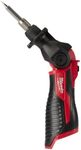
Portability and ErgonomicsPortability and ergonomics refer to the ease of handling and comfort of the soldering iron. This is important because a lightweight, well-designed iron can reduce hand fatigue and improve precision. Consider the size, weight, and grip of the soldering iron. If you need to carry the iron to different locations or work for extended periods, look for a portable and ergonomic model. For stationary or short-term use, these factors may be less critical.
Safety FeaturesSafety features include aspects like automatic shut-off, heat-resistant handles, and protective covers. These are important to prevent accidents and ensure safe operation. Automatic shut-off can prevent overheating, while heat-resistant handles protect your hands. If safety is a priority, look for models with these features. For experienced users who are confident in their handling, basic safety features may be sufficient.