Buying Guide for the Best Rabbit Air Purifiers
Choosing the right rabbit air purifier can significantly improve the air quality in your home, making it healthier and more comfortable to live in. When selecting an air purifier, it's important to consider several key specifications that will determine how well the device meets your needs. Understanding these specifications will help you make an informed decision and ensure you get the best fit for your environment.Coverage AreaCoverage area refers to the size of the room that the air purifier can effectively clean. This is important because an air purifier that is too small for your room will not be effective, while one that is too large may be unnecessarily powerful and consume more energy. Coverage area is usually measured in square feet. For small rooms (up to 200 sq ft), a compact air purifier will suffice. Medium rooms (200-400 sq ft) require a mid-sized purifier, while large rooms (over 400 sq ft) need a high-capacity model. Choose an air purifier with a coverage area that matches or slightly exceeds the size of your room.
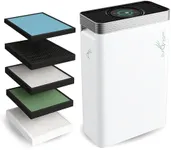
Filtration SystemThe filtration system is the core of an air purifier, determining what types of particles it can remove from the air. This is crucial for addressing specific air quality issues, such as allergens, smoke, or odors. Common types of filters include HEPA (High-Efficiency Particulate Air) filters, which are excellent for capturing small particles like dust, pollen, and pet dander. Activated carbon filters are effective at removing odors and chemical vapors. Some models also include UV-C light to kill bacteria and viruses. Consider your specific needs, such as allergies or pet odors, and choose a purifier with the appropriate filtration system.
Noise LevelNoise level indicates how loud the air purifier will be during operation, measured in decibels (dB). This is important for ensuring that the device does not disturb your daily activities or sleep. Air purifiers typically range from very quiet (below 30 dB) to quite loud (above 60 dB). For bedrooms or quiet spaces, look for models that operate at 30 dB or lower. For living rooms or areas where some background noise is acceptable, a noise level of up to 50 dB may be tolerable. Choose a noise level that fits the environment where the purifier will be used.
CADR (Clean Air Delivery Rate)CADR measures the volume of air that an air purifier can clean of specific particles (like smoke, pollen, and dust) per minute, and is expressed in cubic feet per minute (CFM). This is important for understanding the efficiency and speed of the air purifier. Higher CADR ratings indicate faster and more effective air cleaning. For small rooms, a CADR of 100-150 CFM may be sufficient. Medium rooms may require 150-200 CFM, while large rooms benefit from 200 CFM or higher. Choose a CADR rating that matches the size of your room and your air quality needs.
Energy ConsumptionEnergy consumption refers to how much electricity the air purifier uses, typically measured in watts. This is important for understanding the long-term operating costs and environmental impact of the device. Energy-efficient models can save you money on electricity bills and are better for the environment. Look for air purifiers with Energy Star certification, which indicates they meet energy efficiency guidelines set by the EPA. Consider how often you will use the purifier and choose a model that balances performance with energy efficiency.
Maintenance RequirementsMaintenance requirements include how often filters need to be replaced or cleaned, and the ease of performing these tasks. This is important for ensuring the air purifier continues to operate effectively and for managing ongoing costs. Some air purifiers have washable filters, which can be more cost-effective but require regular cleaning. Others use disposable filters that need to be replaced every few months. Consider your willingness to perform maintenance tasks and choose a model with maintenance requirements that fit your lifestyle.