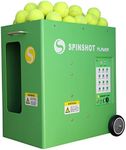
Buying Guide for the Best Portable Tennis Ball Machines
Choosing the right portable tennis ball machine can significantly enhance your practice sessions and overall game. These machines are designed to help you practice your strokes, improve your consistency, and simulate real match conditions. When selecting a tennis ball machine, it's important to consider several key specifications to ensure it meets your needs and skill level. Here are the main specs to look at and how to choose the best fit for you.Ball CapacityBall capacity refers to the number of tennis balls the machine can hold at one time. This is important because it determines how long you can practice without needing to refill the machine. Machines with a lower capacity (50-100 balls) are suitable for beginners or casual players who don't need extended practice sessions. Mid-range machines (100-150 balls) are ideal for intermediate players who want longer practice times. High-capacity machines (150+ balls) are best for advanced players or coaches who need extensive practice sessions without frequent interruptions.
OscillationOscillation is the machine's ability to vary the direction of the ball throws, simulating real match conditions by sending balls to different areas of the court. This feature is crucial for practicing footwork and shot placement. Basic machines may offer limited or no oscillation, suitable for beginners focusing on stroke consistency. Intermediate machines provide horizontal oscillation, ideal for players looking to improve their lateral movement. Advanced machines offer both horizontal and vertical oscillation, perfect for simulating complex game scenarios and enhancing overall agility.
Speed RangeThe speed range indicates how fast the machine can shoot the balls. This is important for matching the machine's output to your skill level and training goals. Lower speed ranges (10-50 mph) are suitable for beginners who need to focus on technique and control. Mid-range speeds (50-70 mph) are ideal for intermediate players working on improving their reaction time and shot power. High-speed ranges (70-90+ mph) are best for advanced players who need to practice against fast-paced shots similar to those in competitive matches.
Spin ControlSpin control allows the machine to deliver balls with topspin, backspin, or no spin. This feature is important for practicing different types of shots and preparing for various playing styles. Basic machines may not offer spin control, which is fine for beginners focusing on basic strokes. Intermediate machines provide adjustable spin settings, suitable for players looking to practice and master different spins. Advanced machines offer precise spin control, essential for high-level players who need to simulate match conditions and refine their spin techniques.
PortabilityPortability refers to how easy it is to transport and set up the machine. This is crucial if you plan to move the machine frequently or use it in different locations. Lightweight and compact machines are ideal for players who need to carry the machine to and from the court regularly. Mid-weight machines with wheels are suitable for those who need a balance between portability and features. Heavier machines with advanced features may be less portable but are perfect for players who have a dedicated practice area and prioritize performance over mobility.
Power SourceThe power source of the machine can be either battery-operated or AC-powered. This is important for determining where and how you can use the machine. Battery-operated machines offer greater flexibility and can be used on courts without power outlets, making them ideal for outdoor use. However, they require regular recharging. AC-powered machines provide consistent power and are suitable for indoor courts or locations with easy access to power outlets. Choose based on where you plan to practice most frequently.