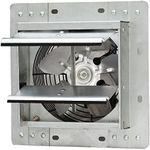
Buying Guide for the Best Portable Kitchen Exhaust Fans
Choosing the right portable kitchen exhaust fan can make a significant difference in maintaining a clean and odor-free kitchen environment. These fans help to remove smoke, steam, and cooking odors, ensuring better air quality and comfort while you cook. To find the best fit for your needs, consider the following key specifications and understand how they impact the performance and suitability of the exhaust fan for your kitchen.Airflow Capacity (CFM)Airflow capacity, measured in cubic feet per minute (CFM), indicates how much air the fan can move. This is crucial because it determines the fan's ability to effectively ventilate your kitchen. For small kitchens or light cooking, a lower CFM (around 100-200) may suffice. Medium-sized kitchens or moderate cooking might require a CFM of 200-400. For large kitchens or heavy cooking, look for a CFM of 400 or higher. Choose based on the size of your kitchen and your cooking habits.
Noise Level (dB)The noise level of an exhaust fan, measured in decibels (dB), affects how comfortable it is to use. A quieter fan (under 50 dB) is ideal for those who are sensitive to noise or have an open kitchen layout. Moderate noise levels (50-70 dB) are generally acceptable for most users. Fans above 70 dB can be quite loud and may be disruptive. Consider your tolerance for noise and the layout of your kitchen when choosing the noise level.
Size and PortabilityThe size and portability of the exhaust fan determine how easily it can be moved and installed in different locations. Smaller, lightweight fans are easier to handle and can be placed on countertops or mounted in various spots. Larger fans may offer more power but can be cumbersome to move. If you need flexibility and ease of use, opt for a compact and portable model. For more permanent setups, a larger fan might be suitable.
Filter TypeExhaust fans come with different types of filters, such as charcoal or mesh filters, which help to trap grease and odors. Charcoal filters are effective at removing odors but need to be replaced periodically. Mesh filters are washable and reusable, making them more cost-effective in the long run. Choose a filter type based on your preference for maintenance and effectiveness in odor removal.
Energy EfficiencyEnergy efficiency is important for reducing electricity consumption and saving on utility bills. Look for fans with an Energy Star rating or those that specify low power consumption. More efficient models will use less energy while still providing adequate ventilation. If you are environmentally conscious or want to save on energy costs, prioritize energy-efficient models.
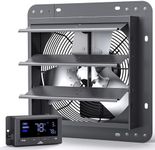
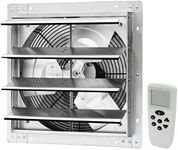
Control OptionsControl options, such as speed settings and remote control, affect how easily you can operate the fan. Multiple speed settings allow you to adjust the airflow based on your cooking needs. Remote controls add convenience, especially if the fan is mounted in a hard-to-reach place. Consider how much control and convenience you need when selecting a fan with the appropriate control options.