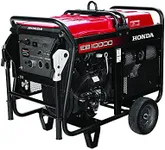
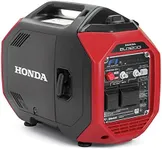
Buying Guide for the Best Portable Honda Generators
When choosing a portable Honda generator, it's important to consider your specific needs and how you plan to use the generator. Portable generators are versatile and can be used for various purposes such as camping, tailgating, home backup power, or on job sites. Understanding the key specifications will help you select the best model for your requirements.Power Output (Wattage)Power output, measured in watts, indicates how much electricity the generator can produce. This is crucial because it determines what and how many devices you can power simultaneously. Generators typically range from 1,000 to 10,000 watts. For light use like camping or tailgating, a generator with 1,000 to 2,000 watts is usually sufficient. For home backup or job sites, you might need 3,000 to 5,000 watts or more. Assess the total wattage of the devices you plan to power to choose the right generator.
Fuel TypePortable Honda generators typically run on gasoline, but some models can use propane or natural gas. Gasoline is widely available and convenient for most users. Propane can be a cleaner option and is easier to store for long periods. Consider your access to fuel and storage capabilities when choosing the fuel type. If you need a generator for emergency situations, ensure you have a reliable fuel source.
Run TimeRun time refers to how long the generator can operate on a full tank of fuel. This is important for planning how often you will need to refuel, especially during extended use. Generators with longer run times are more convenient for overnight use or during power outages. Look for a generator that offers a run time that matches your needs, whether it's a few hours for short activities or 8-12 hours for longer periods.
PortabilityPortability is determined by the generator's weight, size, and design features like handles or wheels. If you need to move the generator frequently, a lighter and more compact model with wheels will be easier to transport. For stationary use, such as home backup, portability may be less of a concern. Consider how and where you will use the generator to determine the importance of portability.
Noise LevelNoise level, measured in decibels (dB), indicates how loud the generator will be during operation. This is important for user comfort and compliance with noise regulations, especially in residential areas or campsites. Generators with noise levels below 60 dB are considered quiet and are suitable for most environments. If noise is a concern, look for models specifically designed to operate quietly.
Starting MechanismGenerators can have different starting mechanisms, such as manual recoil start, electric start, or remote start. Manual recoil start requires pulling a cord, which can be physically demanding. Electric start is more convenient, requiring just the push of a button. Remote start allows you to start the generator from a distance. Choose a starting mechanism based on your preference for ease of use and convenience.
Inverter TechnologyInverter generators produce cleaner and more stable power, making them suitable for sensitive electronics like laptops and smartphones. They are also typically quieter and more fuel-efficient. If you plan to power sensitive devices or need a generator for recreational use, an inverter generator is a good choice. For general use or powering larger appliances, a conventional generator may suffice.