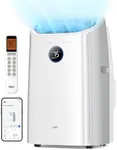
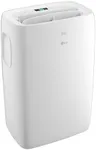
Buying Guide for the Best Portable AC Units For Apartments
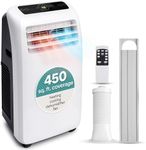
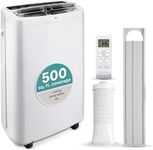
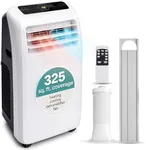
Choosing the right portable air conditioning unit for your apartment can make a significant difference in your comfort during hot weather. Portable AC units are convenient because they can be moved from room to room and don't require permanent installation. When selecting a portable AC unit, it's important to consider several key specifications to ensure you get the best fit for your needs. Understanding these specs will help you make an informed decision and find a unit that effectively cools your space while being energy-efficient and easy to use.Cooling Capacity (BTU)Cooling capacity, measured in British Thermal Units (BTU), indicates how much heat the unit can remove from a room per hour. This spec is crucial because it determines the size of the area the unit can effectively cool. Units with lower BTU ratings (5,000-8,000 BTU) are suitable for small rooms up to 300 square feet, while mid-range units (8,000-12,000 BTU) can handle medium-sized rooms up to 500 square feet. Higher BTU units (12,000-14,000 BTU) are designed for larger spaces up to 700 square feet. To pick the right one, measure the size of the room you want to cool and choose a unit with a BTU rating that matches or slightly exceeds that area.
Energy Efficiency Ratio (EER)The Energy Efficiency Ratio (EER) measures the unit's cooling efficiency. It is calculated by dividing the BTU rating by the power consumption in watts. A higher EER indicates a more energy-efficient unit, which can save you money on electricity bills. EER values typically range from 8 to 12. For better energy savings, look for units with an EER of 10 or higher. If you plan to use the unit frequently, investing in a higher EER model can be beneficial in the long run.
Noise LevelNoise level, measured in decibels (dB), indicates how loud the unit will be when operating. This is important if you plan to use the unit in a bedroom or living area where quiet is preferred. Portable AC units generally produce noise levels between 50 and 70 dB. Units with noise levels below 55 dB are considered quiet and are suitable for bedrooms or offices. If noise is not a major concern, you can opt for units with higher dB ratings. Consider where you will place the unit and how sensitive you are to noise when making your choice.
Size and PortabilityThe size and portability of the unit are important for ease of movement and storage. Portable AC units come in various sizes and weights, typically ranging from 50 to 80 pounds. Smaller, lighter units are easier to move between rooms and store when not in use. If you need to frequently move the unit or have limited storage space, opt for a more compact and lightweight model. Additionally, check if the unit has built-in handles and caster wheels for easier maneuverability.
Dehumidification FunctionMany portable AC units also have a dehumidification function, which removes excess moisture from the air. This is particularly useful in humid climates, as it can make the room feel cooler and more comfortable. The dehumidification capacity is measured in pints per day. Units with higher dehumidification capacities (up to 70 pints per day) are more effective in very humid conditions. If you live in a humid area, consider a unit with a strong dehumidification feature to enhance comfort.
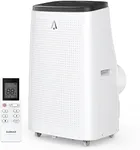
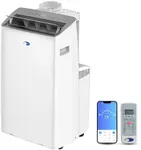
Programmable Timer and Remote ControlA programmable timer allows you to set the unit to turn on or off at specific times, which can help save energy and ensure the room is cool when you need it. A remote control adds convenience by allowing you to adjust settings from a distance. These features are particularly useful if you want to cool the room before you arrive home or if you want to adjust the settings without getting up. Look for units with these features for added convenience and energy efficiency.
Maintenance and Filter TypeRegular maintenance is essential for keeping your portable AC unit running efficiently. Check the type of filter the unit uses and how easy it is to clean or replace. Washable and reusable filters are cost-effective and environmentally friendly, while replaceable filters may require more frequent changes. Consider how often you are willing to perform maintenance and choose a unit with a filter type that suits your preference. Easy access to the filter for cleaning or replacement is also a plus.