Buying Guide for the Best Pocket Zoom Compact Cameras
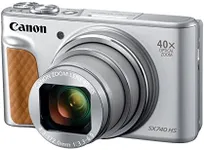
When choosing a pocket zoom compact camera, it's important to consider several key specifications to ensure you get the best fit for your needs. These cameras are designed to be portable and easy to use while still offering powerful zoom capabilities. Understanding the key specs will help you make an informed decision and find a camera that suits your photography style and requirements.Zoom RangeThe zoom range of a camera indicates how much you can magnify your subject. This is important because it determines how close you can get to your subject without physically moving. Zoom ranges are typically expressed in terms of optical zoom, such as 10x, 20x, or 30x. A higher zoom range is beneficial for capturing distant subjects, like wildlife or sports events. If you plan to use the camera for everyday photography or travel, a moderate zoom range (10x-20x) might be sufficient. For more specialized uses, such as bird watching or detailed landscape shots, a higher zoom range (20x-30x or more) would be ideal.
Sensor SizeThe sensor size of a camera affects the quality of the images it produces. Larger sensors generally capture more light, resulting in better image quality, especially in low-light conditions. Common sensor sizes in pocket zoom compact cameras include 1/2.3-inch, 1-inch, and APS-C. A 1/2.3-inch sensor is standard and suitable for casual photography. A 1-inch sensor offers a good balance between image quality and portability, making it ideal for enthusiasts. APS-C sensors are larger and provide superior image quality, but they may make the camera slightly bulkier. Choose a sensor size based on your need for image quality and how much you value portability.
MegapixelsMegapixels refer to the resolution of the camera's sensor, indicating how many millions of pixels the camera can capture. Higher megapixels mean more detail in your photos, which is important if you plan to print large photos or crop images without losing quality. Most pocket zoom compact cameras offer between 12 to 20 megapixels. For general use, 12-16 megapixels are usually sufficient. If you need to capture highly detailed images for professional use or large prints, consider a camera with 18-20 megapixels or more.
Image StabilizationImage stabilization helps reduce blur caused by camera shake, which is especially useful when shooting at long zoom ranges or in low light. There are two main types: optical and digital. Optical image stabilization physically moves the lens or sensor to counteract shake, providing better results. Digital stabilization uses software to reduce blur, which can sometimes result in lower image quality. If you often shoot in challenging conditions or at high zoom levels, look for a camera with optical image stabilization to ensure sharp, clear photos.
Autofocus SystemThe autofocus system determines how quickly and accurately the camera can focus on a subject. This is crucial for capturing sharp images, especially of moving subjects. Autofocus systems can vary from basic contrast-detection to more advanced phase-detection or hybrid systems. Basic contrast-detection is slower but sufficient for still subjects. Phase-detection and hybrid systems are faster and more accurate, making them ideal for action shots or capturing fast-moving subjects. Consider your photography style and choose a camera with an autofocus system that matches your needs.
Battery LifeBattery life indicates how many shots you can take on a single charge. This is important for ensuring your camera lasts through a day of shooting without needing frequent recharges. Battery life is usually measured in the number of shots per charge, with typical ranges from 200 to 400 shots. If you plan to use the camera for extended periods, such as during travel or events, look for a model with longer battery life. For casual use, a camera with moderate battery life should suffice, but consider carrying a spare battery for added convenience.
ConnectivityConnectivity options, such as Wi-Fi, Bluetooth, and NFC, allow you to easily transfer photos to other devices or share them online. This is particularly useful for quickly sharing your images on social media or backing them up to a cloud service. Wi-Fi is the most common and versatile option, enabling direct transfers to smartphones, tablets, or computers. Bluetooth and NFC offer quick pairing and transfer capabilities with compatible devices. If you value convenience and the ability to share your photos on the go, choose a camera with robust connectivity features.