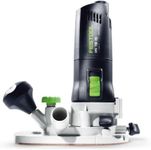
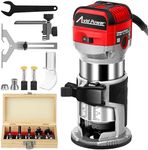
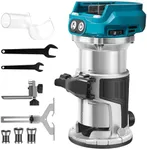
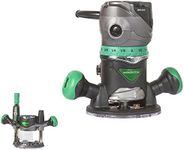
Buying Guide for the Best Plunge Base Trim Routers
When choosing a plunge-base trim router, it's important to consider your specific needs and the types of projects you'll be working on. A plunge-base trim router is a versatile tool that allows you to make precise cuts and adjustments, making it ideal for detailed woodworking tasks. To find the best fit for you, you'll need to look at several key specifications and understand how they impact the router's performance and usability.PowerPower is measured in horsepower (HP) or amps and determines how effectively the router can cut through different materials. Higher power (2 HP or more) is suitable for heavy-duty tasks and harder materials, while lower power (around 1 HP) is sufficient for lighter tasks and softer woods. Choose a power level based on the types of materials you'll be working with and the complexity of your projects.
Speed ControlSpeed control refers to the ability to adjust the router's RPM (revolutions per minute). Variable speed control is important because different materials and bit sizes require different speeds for optimal results. Routers with a wide range of speed settings (8,000 to 25,000 RPM) offer more versatility. If you plan to work with a variety of materials, a router with adjustable speed control will be beneficial.
Plunge DepthPlunge depth is the maximum depth the router bit can reach when plunged into the material. This is crucial for tasks that require deep cuts or grooves. A router with a greater plunge depth (2 inches or more) provides more flexibility for different types of cuts. Consider the depth of cuts you need for your projects when choosing a router.
Base Plate SizeThe base plate size affects the stability and control of the router. Larger base plates offer more stability, which is helpful for larger projects, while smaller base plates provide better maneuverability for detailed work. Think about the size and type of projects you'll be working on to determine the appropriate base plate size for your needs.
ErgonomicsErgonomics refers to how comfortable and easy the router is to handle. Features like comfortable grips, balanced weight, and easy-to-reach controls can make a big difference during extended use. If you plan to use the router for long periods, look for one with good ergonomic design to reduce fatigue and improve precision.
Dust CollectionDust collection is the router's ability to manage and collect dust and debris generated during use. A good dust collection system helps keep your workspace clean and improves visibility while working. If you work in a small or enclosed space, or if you want to maintain a clean work environment, consider a router with an efficient dust collection system.
Ease of Bit ChangesEase of bit changes refers to how simple it is to switch out the router bits. Some routers have quick-release systems or spindle locks that make bit changes faster and easier. If your projects require frequent bit changes, look for a router that offers convenient and quick bit change mechanisms to save time and effort.