Buying Guide for the Best Plumbing Snakes For Toilets
Choosing the right plumbing snake for your toilet can make a significant difference in how effectively you can clear clogs and maintain your plumbing system. Plumbing snakes, also known as drain augers, are essential tools for homeowners and professionals alike. They come in various types and sizes, each designed to tackle different kinds of blockages. Understanding the key specifications will help you select the best tool for your needs, ensuring that you can handle any plumbing issue with ease and efficiency.LengthThe length of a plumbing snake determines how far it can reach into your plumbing system. This is important because clogs can occur at various depths within your pipes. Plumbing snakes typically range from 3 feet to 100 feet. For most household toilet clogs, a snake between 3 to 6 feet is usually sufficient. If you have a longer or more complex plumbing system, you might need a longer snake. Consider the typical distance to the clog in your home to choose the right length.
DiameterThe diameter of the snake's cable affects its ability to navigate through pipes and clear blockages. A thicker cable is more durable and can handle tougher clogs, but it may not fit into smaller pipes. Common diameters range from 1/4 inch to 1/2 inch. For standard toilet clogs, a 1/4 inch to 3/8 inch diameter is usually adequate. If you frequently deal with larger or more stubborn clogs, a thicker cable might be necessary. Match the diameter to the size of your pipes and the severity of the clogs you encounter.
MaterialThe material of the plumbing snake affects its durability and flexibility. Most snakes are made of steel, which provides a good balance of strength and flexibility. Some high-end models may use reinforced materials for added durability. The material is important because it determines how well the snake can bend through pipes without breaking. For occasional use, a standard steel snake is usually sufficient. For frequent or heavy-duty use, consider a snake made from reinforced materials to ensure longevity.
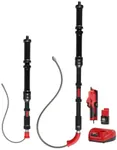
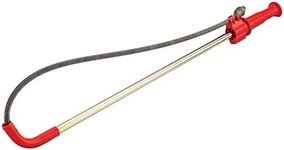
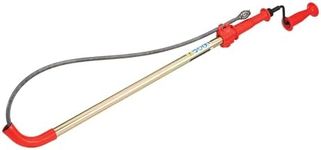
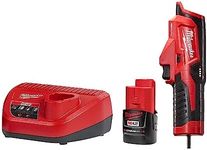
Handle TypeThe handle type of a plumbing snake can impact how easy it is to use. There are manual handles, which require you to turn the snake by hand, and powered handles, which use a motor to rotate the snake. Manual handles are more affordable and suitable for minor clogs, while powered handles can make the job easier and faster, especially for tougher clogs. If you only need to clear occasional clogs, a manual handle should suffice. For frequent or difficult clogs, a powered handle can save time and effort.
Tip DesignThe tip design of the plumbing snake affects its ability to break through and grab clogs. Common tip designs include bulbous tips, which are good for pushing through soft clogs, and cutting tips, which can slice through tougher blockages. Some snakes come with interchangeable tips for versatility. The tip design is important because it determines how effectively the snake can clear different types of clogs. Choose a tip design based on the types of clogs you typically encounter. For general use, a bulbous tip is usually sufficient. For more stubborn clogs, a cutting tip may be necessary.
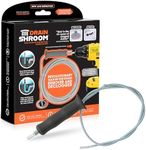



![Meisterfaktur toilet snake [6 feet]](https://images-proxy.bestreviews.guide/9pyry5pUU1AJjg7izbe_PR41aIg=/0x150/https://m.media-amazon.com/images/I/41Fym1gYnzL._AC_CX679_.jpg)