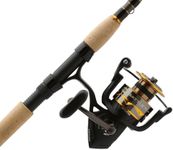
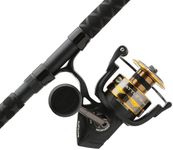
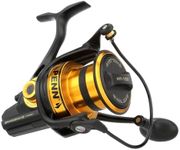
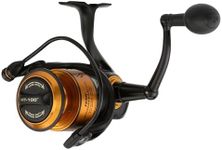
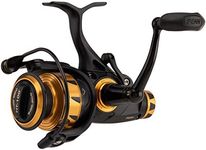
Buying Guide for the Best Penn Fishing Reels
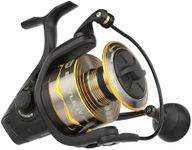
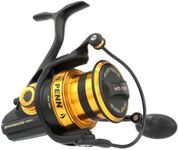
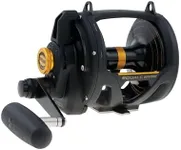
Choosing the right fishing reel is crucial for a successful and enjoyable fishing experience. The right reel can make a significant difference in your ability to catch fish, the ease of use, and the overall durability of your equipment. When selecting a fishing reel, it's important to consider several key specifications that will help you determine which reel is best suited for your needs. Understanding these specs will ensure that you make an informed decision and get the most out of your fishing trips.Reel TypeThe type of reel you choose depends on the kind of fishing you plan to do. There are three main types: spinning reels, baitcasting reels, and conventional reels. Spinning reels are versatile and easy to use, making them ideal for beginners and light to medium fishing. Baitcasting reels offer more control and power, suitable for experienced anglers targeting larger fish. Conventional reels are designed for heavy-duty fishing, often used in deep-sea or big game fishing. Consider your experience level and the type of fishing you will be doing to choose the right reel type.
Gear RatioThe gear ratio of a fishing reel indicates how many times the spool rotates with each turn of the handle. A higher gear ratio (e.g., 6:1) means faster retrieval, which is useful for techniques that require quick line pickup, such as topwater fishing. A lower gear ratio (e.g., 4:1) provides more torque, making it easier to reel in heavy fish or lures. If you plan to fish in a variety of situations, a medium gear ratio (e.g., 5:1) offers a good balance. Choose a gear ratio based on the type of fishing and the speed at which you need to retrieve your line.
Drag SystemThe drag system on a fishing reel controls the amount of resistance a fish feels when it pulls on the line. A smooth and reliable drag system is essential for preventing line breakage and ensuring you can land your catch. Look for reels with a high-quality drag system that offers consistent performance. The drag power you need depends on the size of the fish you are targeting. For smaller fish, a drag system with lower maximum drag is sufficient, while larger fish require a higher maximum drag to handle their strength.
Line CapacityLine capacity refers to the amount of fishing line a reel can hold. This is important because it determines how much line you have available to cast and fight fish. Line capacity is usually measured in yards and is specified for different line strengths (e.g., 10 lb, 20 lb). If you are fishing in deep water or targeting large fish that make long runs, you will need a reel with a higher line capacity. For shallow water or smaller fish, a lower line capacity is sufficient. Match the line capacity to the type of fishing and the size of the fish you expect to catch.
Ball BearingsBall bearings in a fishing reel reduce friction and provide smooth operation. The number and quality of ball bearings can affect the reel's performance. Generally, more ball bearings result in smoother retrieves and better overall performance. However, the quality of the bearings is also important; high-quality bearings can perform better than a larger number of low-quality ones. For most anglers, a reel with 4-6 high-quality ball bearings will provide a good balance of smoothness and durability. Consider the importance of smooth operation in your fishing style when choosing the number of ball bearings.
Reel MaterialThe material of the reel affects its durability, weight, and resistance to corrosion. Common materials include aluminum, graphite, and composite. Aluminum reels are strong and durable, making them suitable for heavy-duty fishing, but they can be heavier. Graphite reels are lighter and more resistant to corrosion, ideal for saltwater fishing, but they may not be as strong as aluminum. Composite reels offer a balance between strength and weight. Choose a reel material based on the type of fishing you do and the conditions you will be fishing in.