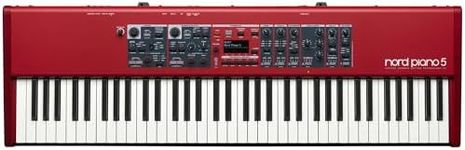
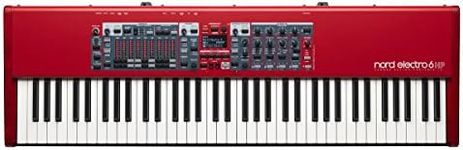
Buying Guide for the Best Nord Keyboard Pianos
When choosing a Nord keyboard piano, it's important to consider several key specifications to ensure you select the best model for your needs. Nord keyboards are known for their high-quality sound, build, and versatility, making them a popular choice among musicians. By understanding the key specs and how they align with your personal requirements, you can make an informed decision and find the perfect keyboard piano for you.Keybed TypeThe keybed type refers to the mechanism and feel of the keys on the keyboard. This is important because it affects how the keyboard responds to your playing style. There are generally three types: semi-weighted, fully-weighted, and hammer action. Semi-weighted keys are lighter and more suitable for synth and organ playing. Fully-weighted keys offer a more piano-like feel, making them ideal for classical and jazz pianists. Hammer action keys replicate the feel of an acoustic piano, providing the most authentic experience for traditional piano players. Choose the keybed type that best matches your playing style and the type of music you intend to play.
Sound EngineThe sound engine is the core component that generates the sounds you hear from the keyboard. Nord keyboards typically feature multiple sound engines, including piano, organ, and synth engines. The quality and variety of sounds produced by these engines are crucial for versatility and performance. If you need a wide range of high-quality piano sounds, look for models with advanced piano engines. For those who play a variety of genres, a keyboard with multiple sound engines will provide the flexibility to switch between different sounds seamlessly. Consider the types of sounds you need and ensure the keyboard's sound engine can deliver them.
PolyphonyPolyphony refers to the number of notes a keyboard can produce simultaneously. This is important for complex pieces of music that require multiple notes to be played at once. Keyboards with higher polyphony can handle more notes without cutting off any sounds, which is essential for layered sounds and sustained chords. For basic playing, 32 to 64-note polyphony may be sufficient. However, for more advanced playing and complex compositions, look for keyboards with 128-note polyphony or higher. Assess your playing style and the complexity of the music you intend to play to determine the appropriate polyphony for your needs.
ConnectivityConnectivity options determine how you can integrate the keyboard with other equipment and devices. This is important for both live performances and studio work. Common connectivity options include MIDI, USB, audio outputs, and pedal inputs. MIDI and USB connections allow you to connect the keyboard to computers and other MIDI-compatible devices for recording and controlling software instruments. Audio outputs are essential for connecting to amplifiers and PA systems. Pedal inputs enhance your playing experience by allowing the use of sustain and expression pedals. Consider the types of connections you need based on your setup and how you plan to use the keyboard.
PortabilityPortability refers to the ease with which you can transport the keyboard. This is important for musicians who frequently travel or perform at different venues. Portability is influenced by the keyboard's weight and size. Lightweight and compact models are easier to carry and set up, making them ideal for gigging musicians. However, they may have fewer features compared to larger, more robust models. If you primarily play at home or in a studio, portability may be less of a concern, and you can opt for a larger keyboard with more features. Evaluate your need for mobility and choose a keyboard that balances portability with the features you require.