Buying Guide for the Best Natural Gas BBQ Grills
Choosing the right natural gas BBQ grill can significantly enhance your outdoor cooking experience. When selecting a grill, it's important to consider various specifications that will impact performance, convenience, and durability. Understanding these key specs will help you make an informed decision that best suits your grilling needs and preferences.BTU RatingBTU (British Thermal Unit) rating measures the amount of heat a grill can produce. This spec is important because it affects how quickly and evenly your grill can cook food. Generally, a higher BTU rating means more heat output. For small to medium grills, a BTU rating of 20,000 to 30,000 is sufficient, while larger grills may require 40,000 BTUs or more. If you plan to cook large quantities of food or want to sear meats quickly, opt for a higher BTU rating. For casual grilling, a moderate BTU rating will suffice.
Cooking AreaThe cooking area is the total space available for grilling, usually measured in square inches. This spec is crucial because it determines how much food you can cook at once. Small grills typically offer around 200-400 square inches, suitable for small families or occasional use. Medium grills provide 400-600 square inches, ideal for regular family meals. Large grills with over 600 square inches are perfect for entertaining guests or cooking for large groups. Choose a cooking area based on the number of people you usually cook for and the types of meals you prepare.
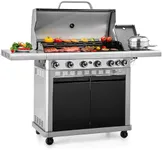
Number of BurnersThe number of burners on a grill affects its versatility and cooking control. More burners allow for different heat zones, enabling you to cook various foods at different temperatures simultaneously. Small grills may have 1-2 burners, suitable for simple grilling tasks. Medium grills often feature 3-4 burners, providing more flexibility. Large grills can have 5 or more burners, ideal for advanced grilling techniques and large meals. Consider how you plan to use the grill and whether you need multiple heat zones for your cooking style.
Material and Build QualityThe material and build quality of a grill impact its durability and heat retention. Common materials include stainless steel, cast iron, and porcelain-coated steel. Stainless steel is highly durable, rust-resistant, and easy to clean, making it a popular choice. Cast iron retains heat well but requires more maintenance to prevent rust. Porcelain-coated steel offers a balance between durability and ease of cleaning. Choose a material based on your preference for maintenance and longevity. High-quality materials will ensure your grill lasts longer and performs better.
Ignition SystemThe ignition system is how you start your grill, and it's important for convenience and reliability. Common types include electronic ignition, push-button ignition, and rotary ignition. Electronic ignition is the most reliable and easy to use, often found in higher-end models. Push-button ignition is simple and effective, suitable for most users. Rotary ignition is less common but still functional. Choose an ignition system that you find easy to operate and dependable, ensuring a hassle-free start every time you grill.
Additional FeaturesAdditional features can enhance your grilling experience and provide extra convenience. These may include side burners, rotisserie kits, built-in thermometers, storage cabinets, and warming racks. Side burners are useful for cooking side dishes or sauces. Rotisserie kits allow for slow roasting meats. Built-in thermometers help monitor cooking temperatures. Storage cabinets provide space for utensils and accessories. Warming racks keep food warm without overcooking. Consider which features will be most beneficial for your cooking style and add value to your grilling setup.