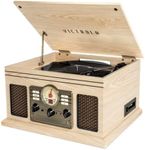
Buying Guide for the Best Modern Record Players
Choosing the right modern record player can be a delightful experience, especially if you love the warm, rich sound of vinyl records. To find the best fit for you, it's important to understand the key specifications and features that differentiate one model from another. This will help you make an informed decision based on your personal preferences and listening habits.Drive TypeThe drive type refers to how the turntable's platter is powered. There are two main types: belt-drive and direct-drive. Belt-drive turntables use an elastic belt to spin the platter, which helps reduce vibrations and can result in better sound quality. Direct-drive turntables have the motor directly connected to the platter, offering more consistent speed and durability, making them popular with DJs. If you prioritize sound quality for home listening, a belt-drive might be best. If you need durability and quick start-up times, consider a direct-drive.
Speed SettingsRecord players typically offer different speed settings to accommodate various types of vinyl records. The most common speeds are 33 1/3 RPM (revolutions per minute) for LPs and 45 RPM for singles. Some models also support 78 RPM for older records. It's important to choose a turntable that supports the speeds of the records you own or plan to buy. If you have a diverse collection, look for a model with multiple speed settings.
Cartridge TypeThe cartridge is the component that holds the needle (stylus) and reads the grooves of the record. There are two main types: moving magnet (MM) and moving coil (MC). MM cartridges are more common, easier to replace, and generally more affordable. MC cartridges can offer superior sound quality but are typically more expensive and harder to replace. For most users, an MM cartridge will provide excellent performance and ease of use. Audiophiles might prefer an MC cartridge for its potential sound quality benefits.
Built-in PreampA preamp amplifies the signal from the turntable to a level that can be played through speakers. Some record players come with a built-in preamp, which simplifies setup and allows you to connect directly to powered speakers or a stereo system. If your audio setup already includes a preamp or you plan to buy a separate one, you might not need a built-in preamp. For beginners or those looking for convenience, a built-in preamp can be a great feature.
Platter MaterialThe platter is the part of the turntable that the record sits on. Common materials include plastic, aluminum, and acrylic. Plastic platters are lightweight and affordable but may not provide the best sound quality. Aluminum platters are more durable and offer better sound isolation. Acrylic platters are considered high-end and can provide excellent sound quality by reducing vibrations. If sound quality is a priority, consider a turntable with an aluminum or acrylic platter.
Tonearm TypeThe tonearm holds the cartridge and guides the needle across the record. There are straight and S-shaped tonearms. Straight tonearms are simpler and can be more precise, while S-shaped tonearms are often preferred for their ability to reduce tracking errors and improve sound quality. The choice between the two often comes down to personal preference and the specific design of the turntable. Consider how important precision and sound quality are to you when choosing a tonearm type.
Connectivity OptionsModern record players can come with various connectivity options, including Bluetooth, USB, and traditional RCA outputs. Bluetooth allows for wireless streaming to speakers or headphones, which is convenient for modern setups. USB connectivity lets you digitize your vinyl collection by connecting the turntable to a computer. RCA outputs are standard for connecting to most stereo systems. Think about how you plan to use your turntable and choose one with the connectivity options that best suit your needs.