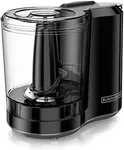
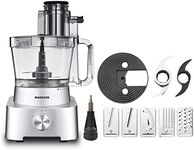
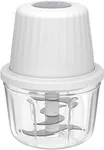
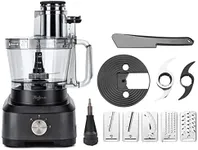
Buying Guide for the Best Mini Food Processors
Choosing the right mini food processor can make your kitchen tasks much easier and more efficient. Mini food processors are great for small tasks like chopping vegetables, making sauces, or preparing small batches of food. When selecting a mini food processor, it's important to consider several key specifications to ensure you get the best fit for your needs. Here are the main specs to look at and how to navigate them.CapacityCapacity refers to the amount of food the processor can handle at one time, usually measured in cups. This is important because it determines how much food you can process in one go. Mini food processors typically range from 1 to 4 cups. If you usually cook for one or two people, a 1-2 cup capacity might be sufficient. For small families or if you like to prepare larger batches, a 3-4 cup capacity would be more suitable.
PowerPower is measured in watts and indicates the strength of the motor. This is important because a more powerful motor can handle tougher tasks like chopping nuts or hard vegetables. Mini food processors usually range from 200 to 450 watts. For basic tasks like chopping herbs or making dressings, a lower wattage (200-300 watts) is adequate. For more demanding tasks, look for a higher wattage (350-450 watts).
Blades and AttachmentsBlades and attachments determine the versatility of the food processor. This is important because different blades can perform different tasks, such as chopping, slicing, or pureeing. Some mini food processors come with multiple blades and attachments, while others have a single multi-purpose blade. If you need a processor for a variety of tasks, look for one with multiple blades and attachments. If your needs are simpler, a single blade might suffice.
Ease of CleaningEase of cleaning refers to how simple it is to clean the processor after use. This is important because a processor that is difficult to clean can be a hassle and discourage you from using it. Look for models with dishwasher-safe parts and fewer crevices where food can get stuck. If you plan to use your processor frequently, ease of cleaning should be a top consideration.
Size and StorageSize and storage refer to the physical dimensions of the processor and how easy it is to store. This is important if you have limited counter or storage space. Mini food processors are designed to be compact, but sizes can still vary. Measure your available space and choose a model that fits comfortably. Some models also come with cord storage or stackable parts to save space.
Noise LevelNoise level refers to how loud the processor is during operation. This is important if you are sensitive to noise or have a household with young children or pets. Mini food processors can vary in noise levels, with some being quieter than others. If noise is a concern for you, look for models that are specifically designed to operate quietly.
Durability and Build QualityDurability and build quality refer to how well the processor is made and how long it is likely to last. This is important because a well-built processor will provide better performance and last longer. Look for models made with high-quality materials like stainless steel blades and sturdy plastic or metal bodies. Reading reviews and checking warranties can also give you an idea of the product's durability.