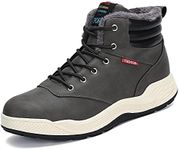
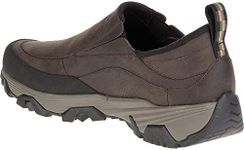
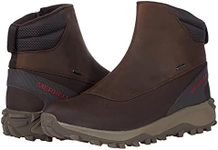
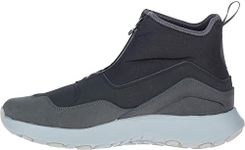
Buying Guide for the Best Merrell Snow Shoes For Men
When it comes to picking the right pair of snow shoes, it's important to consider several key factors to ensure you get the best fit for your needs. Snow shoes are designed to help you walk on snow without sinking, and the right pair can make a big difference in your comfort and performance. Here are some key specifications to consider when choosing snow shoes for men.SizeThe size of snow shoes is crucial because it affects your ability to stay on top of the snow. Snow shoes come in different sizes, typically measured in inches. Larger sizes provide more surface area, which is better for deep, powdery snow, while smaller sizes are more maneuverable and better for packed or icy conditions. To pick the right size, consider your weight (including any gear you’ll be carrying) and the type of snow you’ll be walking on. If you’re heavier or plan to carry a heavy pack, go for a larger size. For lighter individuals or those walking on packed snow, a smaller size will suffice.
Frame MaterialThe frame material of snow shoes affects their durability and weight. Common materials include aluminum, plastic, and composite. Aluminum frames are lightweight and durable, making them a popular choice for most users. Plastic frames are typically more affordable and can be very durable, but they might be heavier. Composite frames offer a balance between weight and durability. Choose a frame material based on your preference for weight and durability. If you plan on long hikes, a lighter frame might be more comfortable, while a more durable frame is better for rugged terrain.
BindingsBindings are what secure your boots to the snow shoes, and they play a significant role in comfort and ease of use. There are different types of bindings, including strap bindings and ratchet bindings. Strap bindings are adjustable and can fit a variety of boot sizes, but they might take longer to put on and take off. Ratchet bindings are quicker to use and provide a more secure fit, but they might not be as adjustable. Consider how easy the bindings are to use, especially with gloves on, and how secure they feel. If you plan on frequent stops or adjustments, quicker bindings might be more convenient.
TractionTraction is provided by the crampons or cleats on the bottom of the snow shoes, which help you grip the snow and ice. Good traction is essential for stability and safety, especially on icy or steep terrain. Snow shoes with aggressive crampons are better for mountainous or icy conditions, while those with less aggressive traction are suitable for flat or rolling terrain. Think about the type of terrain you’ll be navigating and choose snow shoes with appropriate traction. For general use, a moderate level of traction is usually sufficient.
Heel LiftHeel lifts, also known as climbing bars, are a feature that can make uphill travel easier by reducing calf strain. They are small bars that can be flipped up under your heels to provide extra support on steep ascents. This feature is particularly useful if you plan on hiking in hilly or mountainous areas. If you expect to encounter a lot of uphill terrain, look for snow shoes with heel lifts. For flat or gently rolling terrain, this feature might not be necessary.
WeightThe weight of the snow shoes can affect your overall comfort and energy expenditure. Lighter snow shoes are easier to walk in and can reduce fatigue, especially on long hikes. However, lighter models might sacrifice some durability or traction. Heavier snow shoes might be more durable and provide better traction but can be more tiring to use over long distances. Consider the length and difficulty of your hikes when choosing the weight of your snow shoes. For long, strenuous hikes, lighter snow shoes are preferable, while for shorter, rugged hikes, a bit more weight might be acceptable.