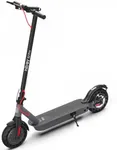
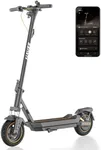
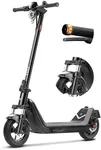
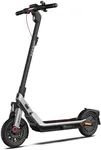
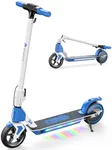
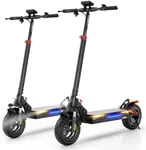
Buying Guide for the Best Long Range Electric Scooters
Choosing the right long-range electric scooter can be a game-changer for your daily commute or recreational rides. It's important to consider various specifications to ensure you get a scooter that meets your needs and provides a comfortable, efficient, and enjoyable riding experience. Here are some key specs to consider when selecting a long-range electric scooter and how to navigate them.RangeThe range of an electric scooter refers to the maximum distance it can travel on a single charge. This spec is crucial because it determines how far you can go without needing to recharge. Ranges can vary significantly, from around 15 miles to over 60 miles. If you plan to use the scooter for long commutes or extended rides, opt for a model with a higher range. For shorter, more casual rides, a lower range may suffice. Consider your typical travel distance and choose a scooter that can comfortably cover that distance with some buffer.
Battery CapacityBattery capacity, measured in watt-hours (Wh), indicates how much energy the battery can store. A higher capacity generally means a longer range. Battery capacities can range from around 250Wh to over 1000Wh. If you need a scooter for long distances or frequent use, a higher capacity battery is beneficial. For occasional or short-distance use, a lower capacity battery may be adequate. Match the battery capacity to your expected usage to ensure you have enough power for your rides.
Motor PowerMotor power, measured in watts (W), affects the scooter's speed and ability to handle inclines. More powerful motors (500W and above) provide better acceleration and can tackle steeper hills, while less powerful motors (250W to 350W) are suitable for flat terrains and moderate speeds. If you live in a hilly area or want a faster ride, choose a scooter with a higher motor power. For flat areas and leisurely rides, a lower motor power will suffice.
WeightThe weight of the scooter is important for portability and ease of use. Lighter scooters (under 30 pounds) are easier to carry and store, making them ideal for commuters who need to take their scooter on public transport or store it in small spaces. Heavier scooters (over 40 pounds) may offer more stability and durability but can be cumbersome to carry. Consider how often you will need to lift or transport the scooter and choose a weight that you can manage comfortably.
Top SpeedTop speed indicates how fast the scooter can go. Speeds typically range from 15 mph to 30 mph. If you need to cover long distances quickly or enjoy a faster ride, a higher top speed is desirable. For safety and control, especially in urban areas with traffic, a lower top speed may be more appropriate. Think about your riding environment and how fast you need to travel to choose the right top speed for your needs.
SuspensionSuspension systems help absorb shocks from rough terrain, providing a smoother ride. Scooters can have front, rear, or full suspension. If you plan to ride on uneven or bumpy surfaces, a scooter with good suspension is essential for comfort. For smooth, paved roads, suspension may be less critical. Assess the typical terrain you will be riding on and decide if suspension is a necessary feature for you.
Tire TypeTire type affects the ride quality and maintenance. Pneumatic (air-filled) tires offer better shock absorption and a smoother ride but require more maintenance, such as checking air pressure and fixing flats. Solid tires are maintenance-free but can provide a rougher ride. If you prioritize comfort and are willing to perform occasional maintenance, pneumatic tires are a good choice. For low-maintenance convenience, solid tires may be preferable.
Braking SystemThe braking system is crucial for safety. Common types include disc brakes, drum brakes, and electronic brakes. Disc brakes offer strong, reliable stopping power and are effective in various conditions. Drum brakes are low-maintenance and perform well in wet conditions. Electronic brakes are less powerful but require minimal maintenance. Consider the importance of braking performance and maintenance in your riding conditions to choose the best braking system for you.
Build QualityBuild quality encompasses the materials and construction of the scooter. High-quality materials like aluminum or carbon fiber provide durability and longevity. A well-built scooter can withstand daily use and rough conditions better than a cheaply made one. Look for scooters with robust construction and good reviews on durability. If you plan to use the scooter frequently or in challenging environments, prioritize build quality to ensure it lasts.