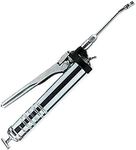
Buying Guide for the Best Lincoln Grease Guns
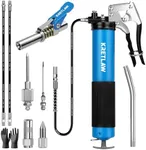
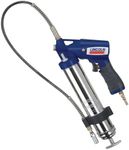
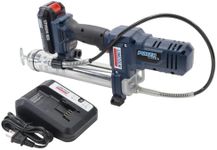
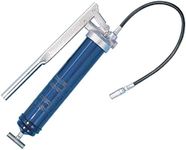
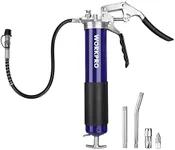
When it comes to picking the right grease gun, it's important to understand the key specifications and features that will best suit your needs. Grease guns are essential tools for lubrication tasks in various applications, from automotive to industrial machinery. By understanding the different specs, you can make an informed decision and choose a grease gun that will provide efficient and reliable performance.Type of Grease GunThere are several types of grease guns, including manual (lever and pistol-grip), pneumatic (air-powered), and battery-operated (cordless). The type of grease gun you choose depends on the frequency and intensity of your lubrication tasks. Manual grease guns are suitable for occasional use and smaller jobs, while pneumatic and battery-operated grease guns are ideal for frequent and heavy-duty applications due to their ease of use and efficiency.
Pressure RatingThe pressure rating of a grease gun indicates the maximum pressure it can generate, usually measured in pounds per square inch (PSI). Higher pressure ratings are important for applications requiring the grease to be forced into tight or high-resistance areas. For general use, a grease gun with a pressure rating of around 6,000 to 10,000 PSI is sufficient. For more demanding tasks, consider a grease gun with a higher pressure rating.
Grease Output per StrokeThis spec measures the amount of grease dispensed with each stroke or trigger pull, typically in ounces or grams. A higher output per stroke means fewer strokes are needed to deliver the required amount of grease, which can save time and effort. For light to moderate tasks, a grease gun with an output of 0.5 to 1 ounce per stroke is adequate. For heavy-duty applications, look for a grease gun with a higher output per stroke.
Cartridge CapacityCartridge capacity refers to the amount of grease a grease gun can hold, usually measured in ounces or grams. Larger capacities mean fewer cartridge changes, which is beneficial for extensive lubrication tasks. Standard capacities range from 14 to 16 ounces. Choose a grease gun with a capacity that matches the scale of your work to minimize downtime and increase efficiency.
Hose Length and FlexibilityThe hose length and flexibility determine how easily you can reach lubrication points, especially in tight or hard-to-access areas. Longer and more flexible hoses provide better reach and maneuverability. For general use, a hose length of 18 to 24 inches is typically sufficient. For more complex tasks, consider a grease gun with a longer and more flexible hose.
Build Quality and DurabilityThe build quality and durability of a grease gun are crucial for ensuring long-term performance and reliability. Look for grease guns made from high-quality materials such as steel or aluminum, which can withstand regular use and harsh conditions. A well-built grease gun will have a sturdy construction, reliable seals, and a comfortable grip, making it easier to use and maintain.