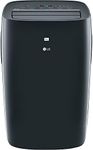
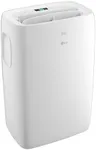
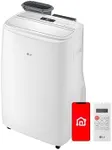
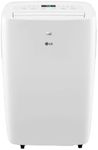
Buying Guide for the Best LG Portable Air Conditioning Units
When choosing an LG portable air conditioning unit, it's important to consider several key specifications to ensure you select the best model for your needs. Portable air conditioners are a great solution for cooling specific areas of your home without the need for permanent installation. By understanding the key features and how they relate to your personal requirements, you can make an informed decision and enjoy a comfortable indoor environment.Cooling Capacity (BTU)Cooling capacity, measured in British Thermal Units (BTU), indicates how much heat the unit can remove from a room per hour. This is crucial because it determines the size of the area the unit can effectively cool. Units with lower BTU ratings (5,000-8,000 BTU) are suitable for small rooms up to 300 square feet, while mid-range units (8,000-12,000 BTU) can handle medium-sized rooms up to 500 square feet. Higher BTU units (12,000-14,000 BTU) are designed for larger spaces up to 700 square feet. To pick the right one, consider the size of the room you need to cool and choose a unit with an appropriate BTU rating.
Energy Efficiency Ratio (EER)The Energy Efficiency Ratio (EER) measures the unit's cooling efficiency by comparing the BTU rating to the power consumption in watts. A higher EER indicates a more energy-efficient unit, which can save you money on electricity bills. EER values typically range from 8 to 12. For better energy savings, look for units with an EER of 10 or higher. If you plan to use the air conditioner frequently, prioritizing a higher EER can be beneficial in the long run.
Noise LevelNoise level, measured in decibels (dB), indicates how loud the unit will be during operation. This is important for maintaining a comfortable and quiet environment, especially in bedrooms or offices. Portable air conditioners usually have noise levels ranging from 50 to 70 dB. Units with noise levels below 55 dB are considered quiet and are ideal for noise-sensitive areas. If you are sensitive to noise or plan to use the unit in a quiet space, opt for a model with a lower noise level.
Portability FeaturesPortability features include the unit's weight, size, and the presence of wheels or handles, which affect how easily you can move the air conditioner from one room to another. Lighter units (under 50 pounds) and those with built-in wheels and handles are easier to transport. If you need to move the unit frequently, look for these features to ensure convenience and ease of use.
Dehumidification FunctionMany portable air conditioners also have a dehumidification function, which removes excess moisture from the air. This is particularly useful in humid climates, as it can improve comfort and prevent mold growth. The dehumidification capacity is measured in pints per hour. Units with higher dehumidification capacities (up to 5 pints per hour) are more effective in very humid conditions. If you live in a humid area, consider a unit with a strong dehumidification function.
Control OptionsControl options include the types of controls available on the unit, such as manual dials, digital displays, remote controls, and smart connectivity. Digital displays and remote controls offer more convenience and precise temperature settings. Some advanced models also offer smart connectivity, allowing you to control the unit via a smartphone app. If you value convenience and modern technology, look for units with digital controls and smart features.
Ventilation and ExhaustPortable air conditioners require proper ventilation to expel hot air outside. This is typically done through an exhaust hose that needs to be connected to a window or another opening. The ease of installation and the length of the exhaust hose can vary between models. Ensure that the unit comes with a suitable window kit and that the hose length is adequate for your setup. If you have specific ventilation requirements, check the compatibility of the unit with your window or opening.