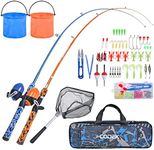
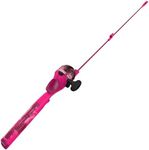
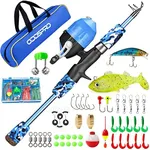
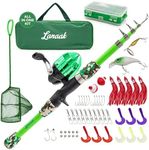
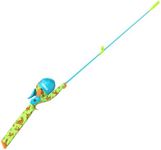
Buying Guide for the Best Kids Fishing Rods
Choosing the right fishing rod for kids can make a big difference in their fishing experience. The right rod will be easy for them to handle, durable enough to withstand some rough use, and suitable for the type of fishing they will be doing. Here are some key specifications to consider when selecting a fishing rod for kids, along with explanations to help you make the best choice.LengthThe length of a fishing rod is important because it affects how far and accurately a child can cast. Shorter rods, typically between 3 to 4 feet, are easier for young children to handle and are great for fishing in small ponds or streams. Medium-length rods, around 5 to 6 feet, offer a balance of casting distance and control, making them suitable for older kids or those fishing in larger bodies of water. Longer rods, over 6 feet, are generally better for more experienced young anglers who need to cast further distances. Choose a length that matches your child's age, strength, and the type of fishing they will be doing.
MaterialFishing rods are made from various materials, each with its own benefits. Fiberglass rods are durable and can withstand rough handling, making them a good choice for younger children. They are also more affordable. Graphite rods are lighter and more sensitive, which can help older kids feel bites more easily, but they can be more fragile. Composite rods combine both materials, offering a balance of durability and sensitivity. Consider your child's age and experience level when choosing the material.
PowerPower refers to the rod's ability to handle different weights of fish. Ultra-light and light power rods are suitable for catching small fish like panfish or trout, making them ideal for young children. Medium power rods can handle a wider range of fish sizes, which is good for older kids who might encounter larger fish. Heavy power rods are designed for big fish and are generally not necessary for most kids. Choose a power level that matches the type of fish your child will be targeting.
ActionAction describes how much and where a rod bends when pressure is applied. Fast action rods bend mostly at the tip and are good for quick hook sets, making them suitable for older kids with some fishing experience. Medium action rods bend more towards the middle, offering a balance of sensitivity and strength, which is great for a variety of fishing situations. Slow action rods bend throughout the entire length, providing more flexibility and making them easier for young children to handle. Consider your child's skill level and the type of fishing they will be doing when choosing the action.
HandleThe handle of a fishing rod should be comfortable and easy for a child to grip. Handles are typically made from materials like cork or EVA foam. Cork handles are lightweight and provide a good grip, but they can be more expensive. EVA foam handles are durable and comfortable, making them a good choice for kids. The length of the handle is also important; shorter handles are easier for small hands to manage, while longer handles can provide more leverage for older kids. Choose a handle that feels comfortable for your child to hold and use.
Reel TypeThe type of reel that comes with the rod can affect how easy it is for a child to use. Spincast reels are the easiest for kids to use because they have a simple push-button mechanism. They are great for beginners. Spinning reels require a bit more skill to operate but offer better casting distance and accuracy, making them suitable for older kids with some fishing experience. Baitcasting reels are generally not recommended for children due to their complexity. Choose a reel type that matches your child's skill level and experience.