Buying Guide for the Best Insulation Testers
When choosing an insulation tester, it's important to understand the key specifications and how they relate to your specific needs. Insulation testers are used to measure the resistance of electrical insulation, ensuring the safety and efficiency of electrical systems. By understanding the key specs, you can select a tester that best fits your requirements, whether you're working on residential, commercial, or industrial projects.Test Voltage RangeThe test voltage range indicates the range of voltages that the insulation tester can apply to the insulation being tested. This is important because different applications require different test voltages. For example, low-voltage systems might only need a tester with a range up to 500V, while high-voltage systems might require up to 5kV or more. To choose the right one, consider the voltage levels of the systems you will be testing. If you work with a variety of systems, a tester with a broader range might be more versatile.
Resistance Measurement RangeThe resistance measurement range shows the range of insulation resistance values that the tester can measure. This is crucial for determining the condition of the insulation. A wider range allows for more flexibility in testing different types of insulation. For general use, a range up to 200 GΩ might be sufficient, but for more specialized applications, you might need a tester that can measure up to 1 TΩ or higher. Choose a tester with a range that covers the expected resistance values of the insulation you will be testing.
AccuracyAccuracy refers to how close the tester's measurements are to the actual resistance values. High accuracy is important for reliable and precise testing results. Accuracy is usually expressed as a percentage of the reading plus a fixed value. For example, ±2% + 2 digits. Higher accuracy is generally better, but it may not be necessary for all applications. If you need precise measurements for critical systems, opt for a tester with higher accuracy. For less critical applications, a standard accuracy level may suffice.
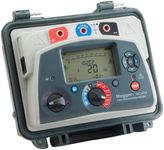
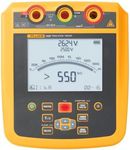
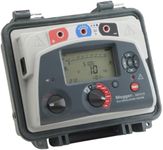
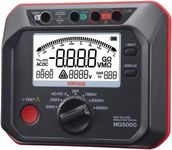
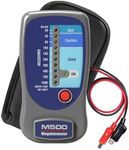
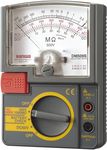
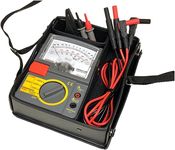
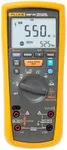
Display TypeThe display type indicates how the tester shows the measurement results. Common types include digital displays, which provide clear and precise readings, and analog displays, which can be easier to read in fluctuating conditions. Some testers offer both types. Digital displays are generally preferred for their accuracy and ease of reading, especially in low-light conditions. However, if you are used to analog displays or need to observe trends in real-time, an analog or dual-display tester might be more suitable.
Additional FeaturesAdditional features can enhance the functionality and convenience of an insulation tester. These might include data logging, Bluetooth connectivity, automatic calculation of polarization index (PI) and dielectric absorption ratio (DAR), and rugged design for field use. Consider what additional features might be beneficial for your work. For example, data logging can be useful for keeping records of tests, while Bluetooth connectivity can facilitate easy data transfer. Choose a tester with features that align with your specific needs and workflow.