Buying Guide for the Best Indoor TV Antennas For Digital Tv
Choosing the right indoor TV antenna for digital TV can significantly enhance your viewing experience by providing access to a variety of channels without the need for a cable subscription. The key to finding the best fit for you is understanding the different specifications and how they align with your specific needs and environment. Here are the key specs to consider when selecting an indoor TV antenna.RangeThe range of an indoor TV antenna indicates how far it can receive signals from broadcast towers. This is important because it determines the number of channels you can access. Antennas with a range of 20-30 miles are suitable for urban areas where broadcast towers are closer. For suburban areas, a range of 30-50 miles is ideal, while rural areas may require antennas with a range of 50 miles or more. To pick the right one, consider your distance from the nearest broadcast towers and choose an antenna with a range that covers that distance.
Frequency BandsIndoor TV antennas can receive signals on different frequency bands, primarily VHF (Very High Frequency) and UHF (Ultra High Frequency). VHF channels are typically channels 2-13, while UHF channels are 14-51. It's important because some channels may only be available on one band. If you want to access a wide variety of channels, look for an antenna that supports both VHF and UHF. Check the channels you want to watch and ensure the antenna you choose can receive those frequencies.
AmplificationAmplified antennas come with a built-in signal booster to enhance weak signals, which can be crucial in areas with poor reception. This is important if you live far from broadcast towers or in an area with many obstructions like buildings or trees. Amplified antennas can help you get clearer signals and more channels. If you live in a location with strong signal strength, a non-amplified antenna may suffice. Assess your signal strength using online tools or apps and decide if you need an amplified antenna based on your findings.
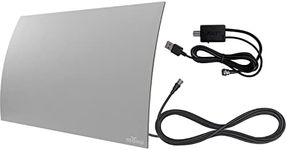
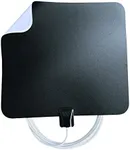
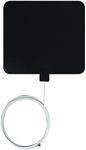
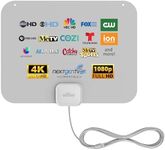
Design and SizeThe design and size of an indoor TV antenna can affect both its performance and how well it fits into your home decor. Some antennas are flat and can be mounted on a wall or window, while others are more compact and can be placed on a shelf. This is important for both aesthetic reasons and signal reception. Flat antennas are often better for mounting in higher locations, which can improve reception. Choose a design that fits your space and allows for optimal placement to get the best signal.
Multi-Directional vs. DirectionalMulti-directional antennas can receive signals from multiple directions, while directional antennas focus on signals from one direction. This is important because it affects how you position the antenna and the consistency of the signal. Multi-directional antennas are ideal if you have broadcast towers in different directions or if you want a simpler setup. Directional antennas are better if all the towers are in one direction and you want to maximize signal strength. Determine the location of your broadcast towers and choose the type that best suits your setup.
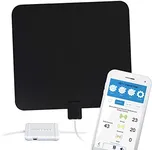
Ease of InstallationThe ease of installation refers to how simple it is to set up the antenna and start receiving signals. This is important because a complicated setup can be frustrating and time-consuming. Some antennas come with clear instructions, mounting hardware, and even apps to help you find the best placement. Look for an antenna that offers straightforward installation, especially if you're not very tech-savvy. Consider your comfort level with installation and choose an antenna that you can set up with ease.