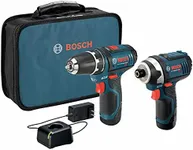
Buying Guide for the Best Impact Cordless Drills
Choosing the right cordless drill can make a significant difference in your DIY projects or professional work. Cordless drills offer the convenience of portability and ease of use without the hassle of cords. When selecting a cordless drill, it's important to consider several key specifications to ensure you get the best fit for your needs. Understanding these specs will help you make an informed decision and find a drill that meets your requirements effectively.Battery VoltageBattery voltage determines the power of the cordless drill. Higher voltage means more power, which is essential for heavy-duty tasks. Cordless drills typically range from 12V to 20V. For light tasks like assembling furniture or drilling into soft materials, a 12V drill is sufficient. For more demanding tasks like drilling into masonry or metal, a 18V or 20V drill is recommended. Choose the voltage based on the intensity of the tasks you plan to perform.
Battery TypeThe type of battery affects the drill's performance and longevity. The most common types are Nickel-Cadmium (NiCd) and Lithium-Ion (Li-Ion). Li-Ion batteries are lighter, hold a charge longer, and have no memory effect, making them more efficient and convenient. NiCd batteries are generally cheaper but heavier and less efficient. For most users, Li-Ion batteries are the better choice due to their superior performance and convenience.
Chuck SizeThe chuck size determines the maximum diameter of the drill bit that the drill can accommodate. Common sizes are 3/8 inch and 1/2 inch. A 3/8 inch chuck is suitable for most household tasks and light-duty work, while a 1/2 inch chuck is better for heavy-duty tasks and larger drill bits. Consider the types of projects you will be working on to decide the appropriate chuck size for your needs.
Speed SettingsCordless drills come with variable speed settings, usually measured in RPM (revolutions per minute). Lower speeds are ideal for driving screws, while higher speeds are better for drilling holes. Some drills offer two-speed settings, while others have more. For versatility, a drill with multiple speed settings is beneficial as it allows you to adjust the speed according to the task at hand.
TorqueTorque is the twisting force that the drill can apply, measured in inch-pounds (in-lbs). Higher torque is necessary for driving screws into tough materials and for heavy-duty drilling. Drills with adjustable torque settings allow you to control the amount of force applied, which is useful for preventing overdriving screws or damaging materials. Choose a drill with sufficient torque for the types of materials you will be working with.
Weight and ErgonomicsThe weight and design of the drill affect its ease of use and comfort, especially during extended use. Lighter drills are easier to handle and reduce fatigue, while ergonomic designs with comfortable grips enhance control and precision. Consider how long you will be using the drill and choose one that feels comfortable and balanced in your hand.
Additional FeaturesSome cordless drills come with additional features like built-in LED lights, belt clips, and keyless chucks. LED lights are useful for working in low-light conditions, while belt clips provide convenience for carrying the drill. Keyless chucks allow for quick and easy bit changes. These features can enhance the overall usability and convenience of the drill, so consider which ones are important for your specific needs.