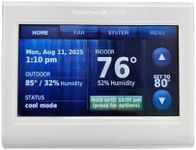
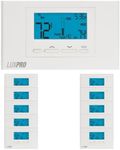
Buying Guide for the Best Heat Pump Thermostats
Choosing the right heat pump thermostat is crucial for maintaining a comfortable and energy-efficient home. A heat pump thermostat is designed to control the heating and cooling system in your home, ensuring that the temperature is regulated according to your preferences. When selecting a thermostat, it's important to consider various specifications to ensure it meets your needs and works effectively with your heat pump system.CompatibilityCompatibility refers to whether the thermostat can work with your specific heat pump system. This is important because not all thermostats are designed to work with all types of heat pumps. To navigate this, check the specifications of your heat pump and ensure the thermostat you choose is compatible. If you have a multi-stage heat pump, make sure the thermostat supports multi-stage systems. For those with auxiliary heating, ensure the thermostat can manage that as well. Your need for compatibility will depend on the type of heat pump system you have installed.
ProgrammabilityProgrammability allows you to set different temperatures for different times of the day or week. This is important for energy efficiency and comfort, as it lets you automatically adjust the temperature when you are home, away, or asleep. Thermostats can range from non-programmable, which require manual adjustments, to 7-day programmable models that offer the most flexibility. If you have a predictable schedule, a programmable thermostat can help you save energy and maintain comfort by adjusting the temperature according to your routine.
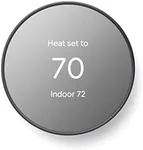
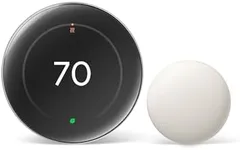
Smart FeaturesSmart features include Wi-Fi connectivity, remote control via smartphone apps, and integration with home automation systems. These features are important for convenience and advanced energy management. Basic models may not have any smart features, while advanced models can learn your schedule, provide energy usage reports, and even adjust settings based on weather forecasts. If you value convenience and want to optimize your energy usage, a thermostat with smart features would be a good fit.
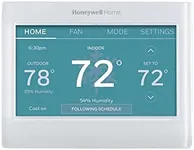
User InterfaceThe user interface refers to how you interact with the thermostat, including the display and controls. This is important for ease of use and accessibility. Some thermostats have simple, button-based interfaces, while others feature touchscreens and intuitive menus. If you prefer straightforward controls, a basic interface might be sufficient. However, if you want more detailed information and easier navigation, a thermostat with a touchscreen and a user-friendly interface would be better.
Energy EfficiencyEnergy efficiency refers to the thermostat's ability to help reduce energy consumption. This is important for lowering your utility bills and reducing your environmental impact. Thermostats with energy-saving features, such as adaptive recovery and energy usage reports, can help you optimize your heating and cooling. If energy savings are a priority for you, look for a thermostat with features designed to enhance efficiency.
InstallationInstallation refers to how easy it is to set up the thermostat in your home. This is important for ensuring that you can get your thermostat up and running without professional help, if desired. Some thermostats are designed for DIY installation with clear instructions and minimal tools required, while others may need professional installation. If you are comfortable with basic electrical work, a DIY-friendly model might be suitable. Otherwise, consider a model that offers professional installation services.