Buying Guide for the Best Headphones Amplifiers
When choosing a headphone amplifier, it's important to understand that this device can significantly enhance the sound quality of your headphones. A good amplifier can provide better clarity, detail, and volume, making your listening experience more enjoyable. To find the best fit for you, consider the following key specifications and how they align with your needs.Power OutputPower output refers to the amount of power the amplifier can deliver to your headphones. This is important because it determines how loud and clear the sound will be. Generally, power output is measured in milliwatts (mW). Low power output (under 100mW) is suitable for in-ear monitors and efficient headphones. Medium power output (100-500mW) is good for most over-ear headphones. High power output (over 500mW) is necessary for high-impedance or less sensitive headphones. Choose an amplifier with a power output that matches the requirements of your headphones to ensure optimal performance.
Impedance MatchingImpedance matching is the process of ensuring that the amplifier's output impedance is compatible with the impedance of your headphones. This is crucial for achieving the best sound quality and avoiding distortion. Headphones typically have an impedance ranging from 16 to 600 ohms. Low-impedance headphones (16-32 ohms) work well with most portable amplifiers, while high-impedance headphones (over 100 ohms) may require a more powerful desktop amplifier. Check the impedance of your headphones and choose an amplifier that can handle it effectively.
Total Harmonic Distortion (THD)Total Harmonic Distortion (THD) measures the amount of distortion an amplifier introduces to the audio signal. Lower THD values indicate cleaner and more accurate sound reproduction. THD is usually expressed as a percentage. A THD of less than 0.1% is considered excellent and will provide high-fidelity sound. If you are an audiophile or someone who values sound purity, look for amplifiers with very low THD. For casual listeners, slightly higher THD values may still be acceptable.
Signal-to-Noise Ratio (SNR)Signal-to-Noise Ratio (SNR) indicates the level of the desired audio signal compared to the level of background noise. A higher SNR means less background noise and clearer sound. SNR is measured in decibels (dB). An SNR of 90dB or higher is generally considered good, with higher values (100dB or more) being ideal for critical listening. If you listen to music in quiet environments or are sensitive to background noise, prioritize amplifiers with a high SNR.
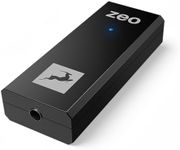
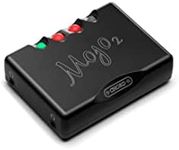
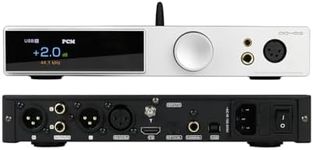
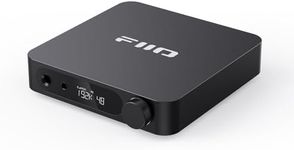
PortabilityPortability refers to how easy it is to carry and use the amplifier on the go. Portable amplifiers are compact, lightweight, and often battery-powered, making them ideal for use with mobile devices. Desktop amplifiers, on the other hand, are larger and require a power outlet, but they typically offer better performance and more features. If you need an amplifier for travel or use with a smartphone, choose a portable model. For home use with a dedicated audio setup, a desktop amplifier may be more suitable.
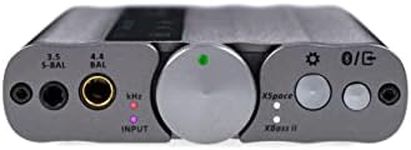
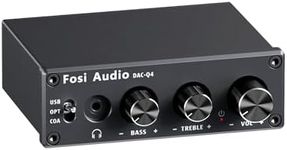
Connectivity OptionsConnectivity options determine how you can connect your headphones and audio sources to the amplifier. Common connections include 3.5mm and 6.3mm headphone jacks, RCA inputs, and digital inputs like USB or optical. Some amplifiers also offer Bluetooth connectivity for wireless use. Consider the devices you plan to use with the amplifier and ensure it has the necessary inputs and outputs. If you have multiple audio sources or prefer wireless convenience, look for amplifiers with versatile connectivity options.