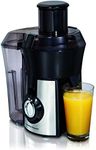
Buying Guide for the Best Hamilton Beach Juicer Machines
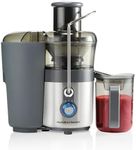
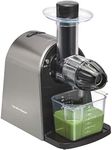
Choosing the right juicer machine can make a significant difference in your juicing experience. When selecting a juicer, it's important to consider your specific needs, such as the types of fruits and vegetables you plan to juice, how often you will use the machine, and how much time you want to spend on preparation and cleaning. Understanding the key specifications of juicer machines will help you make an informed decision and ensure you get the best fit for your lifestyle.Type of JuicerThere are mainly two types of juicers: centrifugal and masticating (also known as slow juicers). Centrifugal juicers are faster and more convenient for quick juicing, making them ideal for busy individuals. They work well with hard fruits and vegetables but may not be as efficient with leafy greens. Masticating juicers, on the other hand, operate at a slower speed, preserving more nutrients and yielding more juice, especially from leafy greens and soft fruits. They are perfect for health enthusiasts who prioritize nutrient retention and are willing to spend a bit more time on juicing.
Motor PowerMotor power, measured in watts, determines the efficiency and capability of the juicer. Higher wattage means the juicer can handle tougher fruits and vegetables with ease. For centrifugal juicers, a motor power of 700-1000 watts is generally sufficient for most tasks. Masticating juicers typically require less power, around 150-250 watts, due to their slower operation. Choose a motor power that matches the types of produce you plan to juice regularly.
Juice YieldJuice yield refers to the amount of juice extracted from fruits and vegetables. Masticating juicers generally provide a higher juice yield compared to centrifugal juicers, especially for leafy greens and soft fruits. If maximizing juice output and minimizing waste is important to you, a masticating juicer might be the better choice. For those who prioritize speed and convenience, a centrifugal juicer will still provide a satisfactory yield for most common fruits and vegetables.
Ease of CleaningCleaning a juicer can be a time-consuming task, so it's important to consider how easy it is to disassemble and clean the machine. Centrifugal juicers typically have fewer parts and are easier to clean, making them suitable for daily use. Masticating juicers, while offering higher juice quality, often have more components that require thorough cleaning. If you plan to juice frequently, look for a juicer with dishwasher-safe parts or one that comes with cleaning brushes to simplify the process.
Size and StorageThe size of the juicer is an important consideration, especially if you have limited counter space or plan to store the juicer when not in use. Centrifugal juicers are generally more compact and easier to store. Masticating juicers can be bulkier due to their design and additional components. Assess your kitchen space and storage options to ensure the juicer you choose fits comfortably in your home.
Noise LevelJuicers can vary significantly in noise levels. Centrifugal juicers tend to be louder due to their high-speed operation, which might be a concern if you prefer a quieter environment or plan to juice early in the morning. Masticating juicers operate more quietly, making them a better choice for those who are sensitive to noise or live in shared spaces. Consider your tolerance for noise and the times you plan to use the juicer when making your decision.
Durability and WarrantyDurability is an important factor, especially if you plan to use your juicer frequently. Look for juicers made with high-quality materials such as stainless steel or BPA-free plastic. Additionally, check the warranty offered by the manufacturer. A longer warranty period is often an indicator of the product's reliability and the manufacturer's confidence in its durability. Choose a juicer that offers a good balance of build quality and warranty coverage to ensure long-term satisfaction.