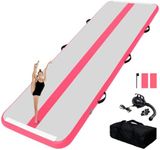
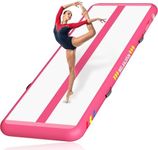
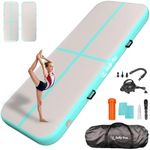
Buying Guide for the Best Gymnastics Air Mats
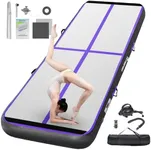
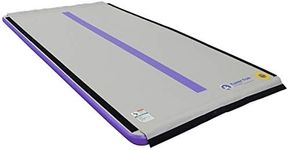
Choosing the right gymnastics air mat is crucial for ensuring safety, comfort, and performance during practice. Air mats are inflatable mats that provide a cushioned surface for gymnasts to practice their routines. They are versatile and can be used for various activities, including tumbling, cheerleading, and martial arts. When selecting an air mat, it's important to consider several key specifications to find the best fit for your needs.SizeSize refers to the dimensions of the air mat, including its length, width, and thickness. This spec is important because it determines the amount of space available for practicing and the level of cushioning provided. Smaller mats (around 3-4 feet wide and 10-13 feet long) are suitable for individual practice and smaller spaces, while larger mats (up to 20 feet long or more) are better for group activities and larger practice areas. Thickness typically ranges from 4 to 8 inches, with thicker mats offering more cushioning for higher-impact activities. Choose a size that fits your practice area and the type of routines you plan to perform.
MaterialMaterial refers to the type of fabric and construction used in the air mat. This spec is important because it affects the durability, comfort, and safety of the mat. High-quality air mats are usually made from durable PVC tarpaulin, which is resistant to wear and tear, and provides a non-slip surface. Some mats may also have reinforced seams for added strength. When choosing a material, consider the frequency and intensity of use. For regular, high-impact practice, opt for mats made from heavy-duty materials to ensure longevity and safety.
Inflation/Deflation TimeInflation/deflation time refers to how quickly the air mat can be set up and packed away. This spec is important for convenience and ease of use. Most air mats come with an electric pump that can inflate the mat within a few minutes. Quick inflation and deflation times (around 1-5 minutes) are ideal for those who need to set up and pack away the mat frequently, such as in a shared practice space or for travel. If you need a mat that can be quickly set up and taken down, look for one with a fast inflation/deflation time.
PortabilityPortability refers to how easy it is to transport and store the air mat. This spec is important for those who need to move the mat between different locations or store it when not in use. Portable air mats are typically lightweight and come with carrying bags or handles. When considering portability, think about the weight of the mat and whether it can be easily folded or rolled up. If you need to transport the mat frequently, choose a lightweight and compact model that comes with a convenient carrying solution.
DurabilityDurability refers to how well the air mat can withstand regular use and resist damage. This spec is important for ensuring the mat lasts a long time and remains safe to use. Durable air mats are made from high-quality materials, have reinforced seams, and are resistant to punctures and abrasions. When assessing durability, consider the intensity and frequency of your practice. For high-impact and frequent use, opt for a mat with a reputation for durability and strong construction.
Safety FeaturesSafety features refer to additional design elements that enhance the safety of the air mat. This spec is important for preventing injuries during practice. Common safety features include non-slip surfaces, reinforced edges, and pressure relief valves to prevent over-inflation. When choosing an air mat, consider the types of routines you will be performing and any specific safety concerns you may have. Look for mats with features that address these concerns and provide a secure practice environment.