Buying Guide for the Best Gable Mounted Solar Attic Fans
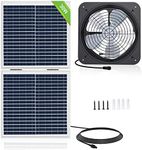
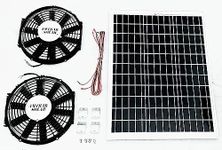
Choosing the right gable-mounted solar attic fan can significantly improve the ventilation in your attic, reduce cooling costs, and extend the life of your roof. These fans use solar energy to power a motor that helps to expel hot air from your attic, making your home more energy-efficient. When selecting a solar attic fan, it's important to consider several key specifications to ensure you get the best fit for your needs. Here are the main factors to consider and how to navigate them.Solar Panel WattageThe solar panel wattage determines how much power the fan can generate from sunlight. Higher wattage panels can produce more power, which means the fan can move more air. Typically, wattages range from 10 to 40 watts. For smaller attics or areas with less intense sunlight, a lower wattage (10-20 watts) may suffice. For larger attics or regions with strong sunlight, a higher wattage (30-40 watts) is more appropriate. Consider the size of your attic and the average sunlight in your area to choose the right wattage.
Airflow Capacity (CFM)Airflow capacity, measured in cubic feet per minute (CFM), indicates how much air the fan can move. This is crucial for determining how effectively the fan can ventilate your attic. Fans typically range from 800 to 1600 CFM. For smaller attics (up to 1600 square feet), a fan with 800-1000 CFM is usually sufficient. For larger attics (over 1600 square feet), look for a fan with 1200-1600 CFM. Match the CFM rating to the size of your attic to ensure adequate ventilation.
Thermostat and HumidistatSome solar attic fans come with built-in thermostats and humidistats, which help regulate the fan's operation based on temperature and humidity levels. A thermostat will turn the fan on or off depending on the attic temperature, while a humidistat does the same based on humidity. These features are important for maintaining optimal attic conditions and preventing moisture buildup. If you live in a region with high humidity or temperature fluctuations, choosing a fan with these features can provide better control and efficiency.
Durability and MaterialsThe durability of the fan and the materials used in its construction are important for ensuring long-term performance and resistance to weather conditions. Look for fans made with high-quality, weather-resistant materials such as stainless steel or UV-resistant plastic. These materials can withstand harsh weather and prolonged sun exposure. If you live in an area with extreme weather conditions, prioritize durability to ensure your fan lasts longer and performs reliably.
Ease of InstallationEase of installation is a key factor, especially if you plan to install the fan yourself. Some models come with detailed instructions and all necessary mounting hardware, making them easier to install. Others may require professional installation. Consider your DIY skills and whether you prefer a straightforward installation process. If you're not comfortable with DIY projects, you might want to choose a model that offers professional installation services.
WarrantyA good warranty can provide peace of mind and protect your investment. Warranties for solar attic fans typically range from 1 to 25 years. A longer warranty often indicates better quality and reliability. When choosing a fan, consider the length and terms of the warranty. If you want assurance that your fan will be covered for potential defects or issues, opt for a model with a longer and more comprehensive warranty.