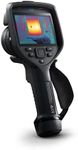
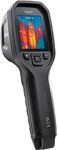
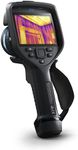
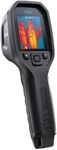
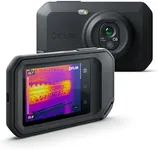
Buying Guide for the Best FLIR Thermal Cameras
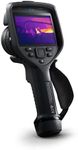
FLIR thermal cameras are specialized devices used to detect and visualize heat patterns. They are widely used in various fields such as building inspections, electrical inspections, mechanical inspections, and even in medical and veterinary applications. Choosing the right FLIR thermal camera involves understanding your specific needs and matching them with the camera's specifications. Here are some key specs to consider when selecting a FLIR thermal camera and how to navigate them to find the best fit for you.ResolutionResolution refers to the number of pixels in the thermal image. Higher resolution means more detail and clarity in the thermal images. This is important because it allows you to see smaller details and identify issues more accurately. Resolutions can range from low (80x60 pixels) to high (640x480 pixels) or even higher. If you need to detect small temperature differences or work in detailed inspections, go for a higher resolution. For general use or larger targets, a lower resolution may suffice.
Thermal Sensitivity (NETD)Thermal sensitivity, also known as Noise Equivalent Temperature Difference (NETD), measures the smallest temperature difference the camera can detect. It is expressed in millikelvins (mK). Lower NETD values indicate higher sensitivity, meaning the camera can detect smaller temperature differences. This is crucial for applications requiring precise temperature measurements. For high-precision tasks, look for a camera with a NETD of 50mK or lower. For less critical applications, a higher NETD may be acceptable.
Temperature RangeThe temperature range indicates the minimum and maximum temperatures the camera can measure. This is important to ensure the camera can handle the temperatures you expect to encounter in your specific application. For example, building inspections may require a range of -20°C to 150°C, while industrial applications might need a range up to 2000°C. Choose a camera with a temperature range that covers the extremes of your expected use.
Field of View (FOV)Field of View (FOV) describes the extent of the observable area the camera can capture at any given moment. A wider FOV allows you to see a larger area, which is useful for scanning large surfaces quickly. Conversely, a narrower FOV provides more detail in a smaller area, which is beneficial for close-up inspections. Determine whether you need to cover large areas or focus on detailed inspections to choose the appropriate FOV.
Frame RateFrame rate refers to how many thermal images the camera captures per second, measured in Hertz (Hz). Higher frame rates provide smoother video and are essential for capturing fast-moving objects or processes. Common frame rates range from 9Hz to 60Hz. For dynamic scenes or moving targets, opt for a higher frame rate. For static inspections, a lower frame rate may be sufficient.
Image Storage and ConnectivityImage storage and connectivity options determine how you can save and transfer thermal images. Some cameras have internal storage, while others use removable memory cards. Connectivity options may include USB, Wi-Fi, or Bluetooth. These features are important for documenting and sharing your findings. Consider how you plan to store and transfer images and choose a camera with the appropriate options.
Durability and ErgonomicsDurability and ergonomics refer to the camera's build quality and ease of use. A rugged, durable camera is essential for harsh environments, while ergonomic design ensures comfort during extended use. Look for features like water and dust resistance, drop test ratings, and user-friendly interfaces. Choose a camera that can withstand your working conditions and is comfortable to use for long periods.