Buying Guide for the Best Fish Finders And GPS Combos
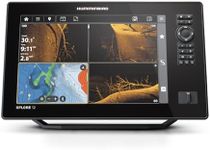
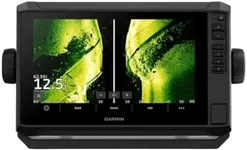
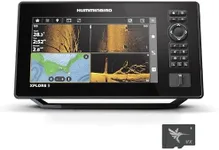
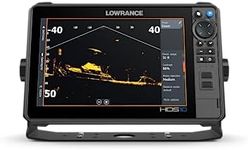
Choosing the right fish finder and GPS combo can significantly enhance your fishing experience. These devices help you locate fish and navigate waters with ease. To make an informed decision, it's important to understand the key specifications and how they align with your needs. Here are the essential specs to consider when selecting a fish finder and GPS combo.Display SizeThe display size of a fish finder and GPS combo is crucial because it affects how easily you can read the information on the screen. Larger displays, typically ranging from 7 to 12 inches, offer better visibility and more detailed views, which is beneficial if you need to see intricate details or if you have poor eyesight. Smaller displays, around 4 to 6 inches, are more compact and can be suitable for smaller boats or kayaks. Choose a display size that matches your boat size and your preference for screen readability.
ResolutionResolution refers to the number of pixels on the screen and determines the clarity of the images. Higher resolution screens provide sharper and more detailed images, making it easier to distinguish between fish and underwater structures. Resolutions can range from 480 x 320 pixels to 1280 x 800 pixels or higher. If you fish in areas with complex underwater terrain or need precise imaging, opt for higher resolution. For casual fishing, a lower resolution might suffice.
Sonar TypeSonar technology is used to detect fish and underwater structures. Common types include traditional sonar, CHIRP sonar, and side imaging sonar. Traditional sonar is good for basic fish detection, CHIRP sonar offers better target separation and depth penetration, and side imaging sonar provides detailed views of the area to the sides of your boat. If you fish in deep waters or need detailed imaging, CHIRP and side imaging are preferable. For general use, traditional sonar may be adequate.
GPS FunctionalityGPS functionality helps you navigate and mark fishing spots. Features to look for include waypoint marking, route planning, and mapping capabilities. Advanced GPS systems offer detailed maps and the ability to create custom routes. If you fish in unfamiliar waters or need precise navigation, a GPS with comprehensive mapping and waypoint features is essential. For simpler navigation needs, basic GPS functionality will do.
Power OutputPower output, measured in watts, affects the depth and clarity of sonar readings. Higher power output allows the sonar to penetrate deeper waters and provide clearer images. Power outputs can range from 200 watts to 1000 watts or more. If you fish in deep or murky waters, higher power output is beneficial. For shallow water fishing, lower power output is usually sufficient.
Transducer TypeThe transducer is the component that sends and receives sonar signals. Types include single frequency, dual frequency, and multi-frequency transducers. Single frequency transducers are suitable for shallow waters, dual frequency transducers offer versatility for different depths, and multi-frequency transducers provide the best performance in various conditions. Choose a transducer type based on the depth and conditions of the waters you fish in.
ConnectivityConnectivity options such as Wi-Fi, Bluetooth, and NMEA 2000 allow you to integrate your fish finder and GPS combo with other devices and systems. This can enable features like data sharing, remote control, and integration with boat systems. If you want to connect your device to smartphones, tablets, or other marine electronics, look for models with robust connectivity options. For standalone use, connectivity may be less critical.