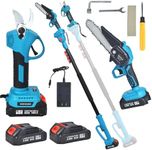
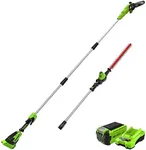
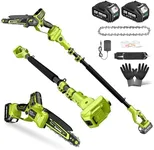
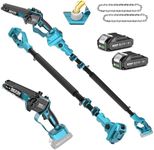
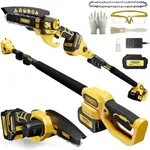
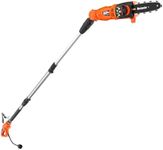
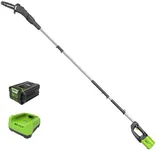
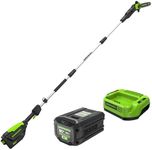
Buying Guide for the Best Extendable Pole Saws
Choosing the right extendable pole saw can make a significant difference in your gardening and tree maintenance tasks. An extendable pole saw allows you to reach high branches without the need for a ladder, making it safer and more efficient. When selecting the best extendable pole saw for your needs, consider the following key specifications to ensure you get the right tool for the job.LengthThe length of an extendable pole saw determines how high you can reach. This spec is important because it directly affects your ability to trim or prune tall branches. Pole saws typically range from 8 to 20 feet in length. For small to medium trees, a pole saw with a length of 8 to 12 feet should suffice. For taller trees, consider a pole saw that extends up to 20 feet. Choose a length based on the height of the trees you need to maintain.
WeightThe weight of the pole saw affects how easy it is to handle and maneuver. A lighter pole saw is easier to use for extended periods, reducing fatigue. Pole saws can weigh anywhere from 7 to 20 pounds. If you plan to use the saw for long durations or have limited upper body strength, opt for a lighter model. Heavier models may offer more power but can be more challenging to handle.
Power SourcePole saws can be powered by gas, electricity, or batteries. This spec is important because it influences the saw's power, portability, and maintenance needs. Gas-powered pole saws are powerful and suitable for heavy-duty tasks but are heavier and require more maintenance. Electric pole saws are lighter and easier to maintain but need a power outlet and extension cord. Battery-powered pole saws offer a good balance of power and portability but have limited run time. Choose a power source based on the type of tasks you need to perform and your preference for maintenance and convenience.
Blade LengthThe blade length determines the size of branches the pole saw can cut. This spec is important because it affects the saw's cutting capacity. Blade lengths typically range from 8 to 12 inches. For general pruning and trimming, a blade length of 8 to 10 inches is usually sufficient. For cutting thicker branches, consider a blade length of 10 to 12 inches. Choose a blade length based on the diameter of the branches you need to cut.
Cutting Bar and ChainThe cutting bar and chain are the components that do the actual cutting. This spec is important because it affects the efficiency and smoothness of the cut. Look for a pole saw with a high-quality bar and chain that are easy to maintain and replace. Some models come with self-lubricating chains, which can reduce maintenance. Choose a cutting bar and chain that match the type of wood and thickness of branches you will be cutting.
AdjustabilityAdjustability refers to how easily you can extend and retract the pole. This spec is important because it affects the versatility and ease of use of the pole saw. Some models have a fixed length, while others offer multiple extension points. Look for a pole saw with a user-friendly locking mechanism that allows you to adjust the length quickly and securely. Choose a model with adjustability features that match your needs for different heights and types of tasks.
Safety FeaturesSafety features are designed to protect the user during operation. This spec is important because it reduces the risk of accidents and injuries. Common safety features include anti-vibration handles, safety switches, and blade guards. Look for a pole saw with features that enhance your safety and comfort while using the tool. Choose a model with safety features that give you confidence and peace of mind during operation.