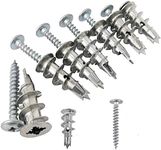
Buying Guide for the Best Drywall Anchors And Screws
Choosing the right drywall anchors and screws is essential for ensuring that your fixtures are securely mounted to your walls. The right choice will depend on the weight of the item you're hanging, the type of wall you have, and the specific requirements of your project. Understanding the key specifications will help you make an informed decision and ensure that your installation is safe and durable.Weight CapacityWeight capacity refers to the maximum weight that the anchor and screw can support. This is crucial because using an anchor with insufficient weight capacity can result in the fixture falling off the wall, potentially causing damage or injury. Weight capacities are usually divided into light-duty (up to 20 pounds), medium-duty (20-50 pounds), and heavy-duty (over 50 pounds). To choose the right one, consider the weight of the item you are hanging and select an anchor that can support at least that much weight, preferably with some margin for safety.
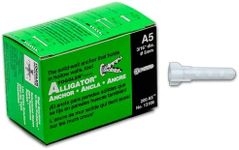
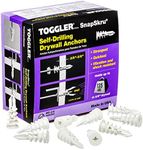
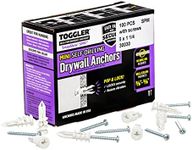
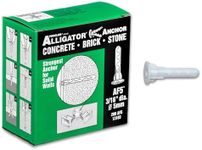
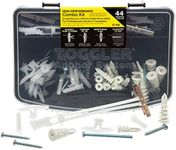
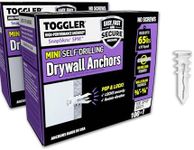
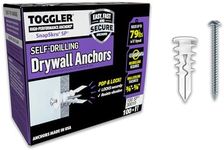
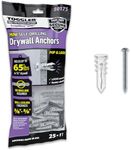
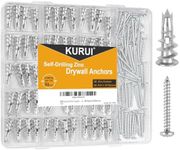
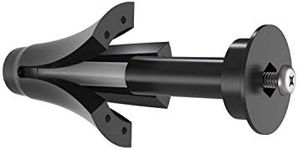
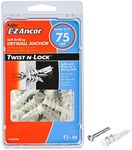
Anchor TypeThere are several types of drywall anchors, including plastic expansion anchors, self-drilling anchors, toggle bolts, and molly bolts. Each type has its own strengths and is suited for different applications. Plastic expansion anchors are good for light-duty tasks, self-drilling anchors are convenient for medium-duty tasks, toggle bolts are excellent for heavy-duty tasks, and molly bolts provide a strong hold for medium to heavy-duty tasks. Choose the anchor type based on the weight of the item and the ease of installation you prefer.
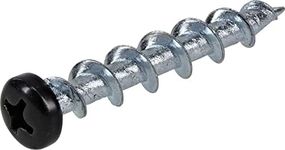
Screw LengthScrew length is important because it determines how securely the screw will hold the anchor and the fixture to the wall. If the screw is too short, it may not provide enough grip, while a screw that is too long may damage the wall or the fixture. Screw lengths typically range from 1 inch to 3 inches. To choose the right length, consider the thickness of the drywall and the depth of the anchor. A good rule of thumb is to select a screw that is long enough to go through the anchor and into the wall stud or drywall by at least 1 inch.
MaterialThe material of the anchor and screw affects their strength and durability. Common materials include plastic, metal, and nylon. Plastic anchors are suitable for light-duty tasks, metal anchors (such as zinc or steel) are better for medium to heavy-duty tasks, and nylon anchors offer a balance of strength and flexibility. Choose the material based on the weight of the item and the environment where the anchor will be used. For example, metal anchors are more suitable for humid environments as they are less likely to degrade over time.
Wall Type CompatibilityDifferent anchors are designed for different wall types, such as drywall, plaster, or masonry. Using the wrong type of anchor for your wall can result in a poor hold and potential damage. Check the packaging or product description to ensure that the anchor is compatible with your wall type. For example, plastic expansion anchors are typically used for drywall, while toggle bolts can be used for both drywall and plaster. Choose an anchor that is specifically designed for the type of wall you have to ensure a secure installation.