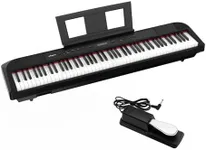
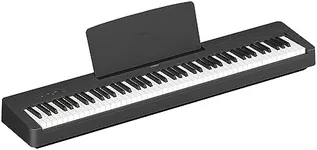
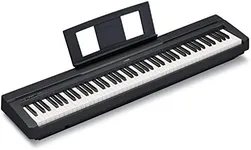
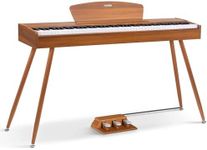
Buying Guide for the Best Digital Pianos With 88 Key Weighted Keyboards
Choosing the right digital piano with 88-key weighted keyboards can be a rewarding experience if you know what to look for. Digital pianos are designed to replicate the feel and sound of an acoustic piano while offering additional features and conveniences. When selecting a digital piano, it's important to consider several key specifications that will impact your playing experience and satisfaction. Understanding these specs will help you make an informed decision that aligns with your needs and preferences.Key ActionKey action refers to how the keys respond to your touch, which is crucial for replicating the feel of an acoustic piano. Weighted keys are designed to mimic the resistance and response of traditional piano keys. There are different types of key actions, such as fully weighted, semi-weighted, and hammer action. Fully weighted keys provide the most realistic feel, similar to an acoustic piano, making them ideal for serious pianists. Semi-weighted keys offer a lighter touch, which might be suitable for beginners or those who play other keyboard instruments. Hammer action keys simulate the mechanical action of a grand piano, providing a more authentic playing experience. Choose the key action based on your playing style and the level of realism you desire.
Sound QualitySound quality is determined by the digital piano's sound engine and the samples used to produce the piano tones. High-quality sound engines and samples will provide a more realistic and expressive sound. Look for digital pianos that use high-definition sampling from renowned acoustic pianos. Some models offer multiple sound settings and effects, allowing you to customize the sound to your preference. If you are a beginner, a basic sound engine might suffice, but advanced players will benefit from superior sound quality that captures the nuances of their performance.
PolyphonyPolyphony refers to the number of notes a digital piano can produce simultaneously. Higher polyphony allows for more complex and sustained passages without notes cutting off. Entry-level digital pianos may offer 32 to 64-note polyphony, which is adequate for simple pieces. Intermediate and advanced players should look for at least 128-note polyphony to ensure smooth performance during intricate compositions. If you plan to use the sustain pedal frequently or layer multiple sounds, higher polyphony is essential to avoid note dropouts.
ConnectivityConnectivity options on a digital piano can enhance your playing and learning experience. Common connectivity features include USB, MIDI, and audio outputs. USB and MIDI connections allow you to connect the piano to a computer or other devices for recording, composing, and using educational software. Audio outputs enable you to connect to external speakers or amplifiers for better sound projection. If you plan to record your music, use learning apps, or perform with external sound systems, ensure the digital piano has the necessary connectivity options.
Built-in FeaturesBuilt-in features such as metronomes, recording capabilities, and lesson modes can be very useful, especially for beginners. A metronome helps you keep time, while recording features allow you to capture and review your performances. Lesson modes often include built-in songs and exercises to aid in learning. Advanced players might look for additional features like split and layer functions, which enable you to play different sounds on different parts of the keyboard or combine sounds for a richer performance. Consider which built-in features will support your practice and performance needs.
PortabilityPortability is an important factor if you need to move your digital piano frequently. Some digital pianos are designed to be lightweight and compact, making them easy to transport. These models are ideal for gigging musicians or those with limited space. However, more portable models might compromise on key action and sound quality. If you plan to keep the piano in one place, a heavier, more robust model with better key action and sound quality might be preferable. Assess your need for portability based on your lifestyle and playing environment.