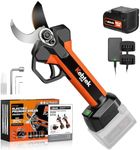
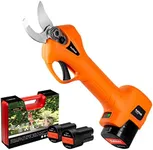
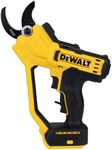
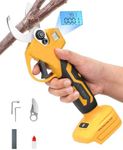
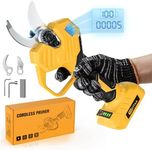
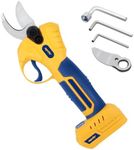
Buying Guide for the Best Dewalt Pruning Shears
When it comes to picking the right pruning shears, it's important to consider a few key specifications to ensure you get the best tool for your gardening needs. Pruning shears are essential for maintaining the health and appearance of your plants, so choosing the right pair can make a big difference in your gardening experience. Here are some key specs to consider and how to navigate them to find the best fit for you.Blade MaterialThe blade material of pruning shears is crucial because it affects the durability and sharpness of the tool. Common materials include stainless steel, carbon steel, and titanium. Stainless steel blades are resistant to rust and easy to maintain, making them a good choice for general use. Carbon steel blades are very sharp and durable but require more maintenance to prevent rust. Titanium blades are lightweight and extremely durable, ideal for heavy-duty use. Choose a blade material based on how often you plan to use the shears and the type of plants you will be pruning.
Blade TypePruning shears come with different blade types, such as bypass, anvil, and ratchet. Bypass blades work like scissors and are ideal for cutting live, green plants as they make clean cuts that promote healthy growth. Anvil blades have a single sharp blade that cuts against a flat surface, suitable for cutting dead or dry branches. Ratchet blades have a mechanism that allows for easier cutting of thicker branches with less effort. Consider the type of plants you will be pruning and choose the blade type that best suits your needs.
Handle DesignThe handle design of pruning shears affects comfort and ease of use. Look for ergonomic handles that fit comfortably in your hand and reduce strain during prolonged use. Some handles have cushioned grips or non-slip coatings for added comfort and safety. Additionally, consider the size and shape of the handles, especially if you have smaller or larger hands. Choose a handle design that feels comfortable and secure to ensure a pleasant pruning experience.
Cutting CapacityCutting capacity refers to the maximum diameter of branches that the pruning shears can cut. This is important because it determines the types of plants and branches you can effectively prune. Pruning shears typically have a cutting capacity ranging from 1/2 inch to 1 inch. For general gardening tasks, a cutting capacity of around 3/4 inch is usually sufficient. If you need to cut thicker branches, look for shears with a higher cutting capacity. Consider the size of the branches you will be pruning and choose shears with an appropriate cutting capacity.
Locking MechanismA locking mechanism is a safety feature that keeps the blades closed when not in use, preventing accidental cuts and injuries. There are different types of locking mechanisms, such as slide locks, twist locks, and latch locks. Slide locks are easy to operate with one hand, while twist locks provide a more secure closure. Latch locks are simple and reliable. Choose a locking mechanism that is easy for you to use and provides a secure closure to ensure safety when the shears are not in use.
WeightThe weight of pruning shears can affect how comfortable they are to use, especially during extended periods of pruning. Lighter shears are easier to handle and reduce hand fatigue, making them ideal for smaller tasks and frequent use. Heavier shears may provide more cutting power and durability, suitable for tougher pruning jobs. Consider how long you will be using the shears and the type of tasks you will be performing. Choose a weight that feels comfortable and manageable for your specific needs.