We Use CookiesWe use cookies to enhance the security, performance,
functionality and for analytical and promotional activities. By continuing to browse this site you
are agreeing to our privacy policy
Best Dewalt Finishing Nailers
From leading brands and best sellers available on the web.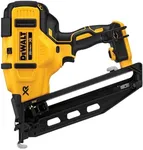
#2
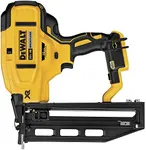
DEWALT
DEWALT 20V MAX* XR Finish Nailer, Straight, 16GA (DCN662B)
View on Amazon
#3
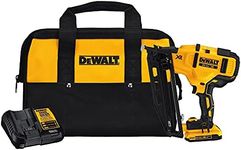
DEWALT
DEWALT 20V MAX* XR Finish Nailer, Angled, 16GA (DCN660D1)
View on Amazon
#4
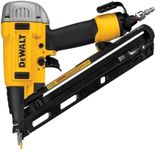
DEWALT
DEWALT Pneumatic Finish Nailer, 15-Gauge, 1/4 in., Corded (DWFP72155)
View on Amazon
#5

DEWALT
DEWALT Finish Nailer with Precision Point, 16GA (DWFP71917)
View on Amazon
Related Products
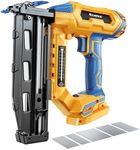
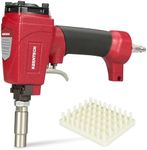
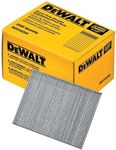
How do we rank products for you?
Our technology thoroughly searches through the online shopping world, reviewing hundreds of sites. We then process and analyze this information, updating in real-time to bring you the latest top-rated products. This way, you always get the best and most current options available.
Most Popular Categories Right Now


Buying Guide for the Best Dewalt Finishing Nailers
When it comes to picking the right DeWalt finishing nailer, it's important to consider a few key specifications that will help you determine which model is the best fit for your needs. Finishing nailers are essential tools for trim work, cabinetry, and other detailed woodworking projects. Understanding the different features and specifications will ensure you choose a nailer that meets your requirements and provides the best performance for your tasks.Power SourceThe power source of a finishing nailer can be either pneumatic (air-powered) or cordless (battery-powered). Pneumatic nailers are typically more powerful and consistent, making them ideal for heavy-duty tasks and prolonged use. They require an air compressor, which can be an additional investment. Cordless nailers offer greater mobility and convenience since they don't need to be tethered to an air hose. They are suitable for smaller projects or when working in areas without easy access to power. Choose a pneumatic nailer if you need consistent power for large projects, or a cordless nailer for flexibility and ease of use in various locations.
Nail GaugeThe nail gauge refers to the thickness of the nails the nailer can handle. Common gauges for finishing nailers are 15-gauge and 16-gauge. A 15-gauge nailer uses thicker nails, which provide stronger holding power and are suitable for heavy trim and baseboards. A 16-gauge nailer uses slightly thinner nails, which are less likely to split delicate trim and are ideal for finer woodworking projects. If you are working on heavy-duty trim or baseboards, a 15-gauge nailer is a better choice. For more delicate trim work or cabinetry, a 16-gauge nailer will be more appropriate.
Nail LengthThe nail length capacity of a finishing nailer determines the range of nail sizes it can drive. Most finishing nailers can handle nails ranging from 1 inch to 2.5 inches in length. Longer nails provide better holding power and are suitable for thicker materials, while shorter nails are ideal for thinner materials and more delicate work. Consider the types of projects you will be working on and choose a nailer that can accommodate the appropriate nail lengths for those tasks. If you frequently work with a variety of materials, a nailer with a wider range of nail lengths will offer greater versatility.
Magazine CapacityThe magazine capacity indicates how many nails the nailer can hold at one time. A larger magazine capacity means fewer reloads, which can increase efficiency, especially during large projects. However, a larger magazine can also make the nailer heavier and bulkier. If you are working on extensive projects and want to minimize downtime, a nailer with a higher magazine capacity is beneficial. For smaller projects or if you prefer a lighter tool, a nailer with a smaller magazine capacity may be more comfortable to use.
Depth AdjustmentDepth adjustment allows you to control how deep the nails are driven into the material. This feature is important for achieving a professional finish and preventing damage to the work surface. Some nailers offer tool-free depth adjustment, which makes it easy to fine-tune the nail depth on the fly. If you need precise control over nail depth for different materials and projects, look for a nailer with an easy-to-use depth adjustment feature. This will help you achieve consistent results and avoid over-driving or under-driving nails.
Weight and ErgonomicsThe weight and ergonomics of a finishing nailer affect how comfortable it is to use, especially during extended periods. A lighter nailer reduces fatigue and is easier to maneuver, while a well-balanced and ergonomically designed tool provides better control and comfort. Consider how long you will be using the nailer and choose a model that feels comfortable in your hand. If you have to work in tight spaces or overhead, a lighter and more compact nailer will be advantageous.