Buying Guide for the Best Deep Cycle Trolling Motor Batteries
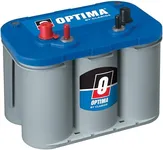
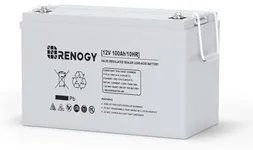
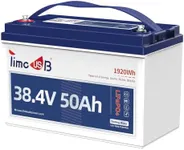
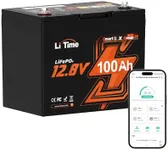
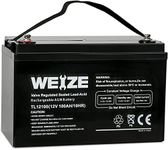
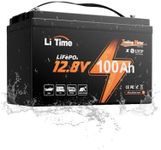
Choosing the right deep-cycle trolling motor battery is crucial for ensuring your boat's trolling motor performs efficiently and reliably. Deep-cycle batteries are designed to provide a steady amount of current over a long period, making them ideal for trolling motors. When selecting a battery, it's important to consider several key specifications to ensure you get the best fit for your needs. Understanding these specs will help you make an informed decision and ensure your trolling motor runs smoothly during your fishing or boating trips.Battery TypeThere are three main types of deep-cycle batteries: Flooded Lead-Acid (FLA), Absorbed Glass Mat (AGM), and Lithium-Ion. FLA batteries are the most affordable but require regular maintenance and can spill if tipped over. AGM batteries are sealed, maintenance-free, and more durable, making them a popular choice. Lithium-Ion batteries are the most expensive but offer the longest lifespan, are lightweight, and have the fastest charging times. Choose a battery type based on your maintenance preference, budget, and performance needs.
Capacity (Amp Hours - Ah)Capacity, measured in amp hours (Ah), indicates how much energy the battery can store. A higher Ah rating means the battery can power your trolling motor for a longer period. Batteries with a capacity of 50-100 Ah are suitable for short trips or smaller boats, while those with 100-200 Ah are better for longer trips or larger boats. Consider how long you typically use your trolling motor and choose a capacity that matches your usage patterns.
VoltageMost trolling motors operate on 12V, 24V, or 36V systems. The voltage of your battery should match the voltage requirements of your trolling motor. A 12V system is common for smaller boats and light usage, while 24V and 36V systems are used for larger boats and more demanding conditions. Check your trolling motor's specifications to determine the appropriate voltage and ensure compatibility.
Reserve Capacity (RC)Reserve Capacity (RC) is the number of minutes a fully charged battery can deliver a specified constant load (usually 25 amps) before the voltage drops below a usable level. A higher RC means the battery can provide power for a longer period under a constant load. This is important for ensuring your trolling motor can run for extended periods without losing power. Choose a battery with a higher RC if you plan on long fishing trips or need reliable power for extended use.
WeightThe weight of the battery can affect the overall performance and handling of your boat. Heavier batteries can provide more capacity but may also add significant weight to your boat, affecting its speed and maneuverability. Lighter batteries, such as Lithium-Ion, offer high capacity without the added weight. Consider the weight of the battery in relation to your boat's capacity and how it might impact your boating experience.
Size and DimensionsThe physical size and dimensions of the battery are important to ensure it fits in the designated battery compartment of your boat. Measure the available space and compare it with the battery dimensions to ensure a proper fit. Some boats have limited space, so it's crucial to choose a battery that fits comfortably without compromising other equipment or storage areas.
Cycle LifeCycle life refers to the number of complete charge and discharge cycles a battery can undergo before its capacity significantly diminishes. A higher cycle life means the battery will last longer and provide more reliable performance over time. AGM and Lithium-Ion batteries typically have a higher cycle life compared to FLA batteries. If you use your trolling motor frequently, investing in a battery with a higher cycle life can be more cost-effective in the long run.
Charging TimeCharging time is the amount of time it takes to fully recharge the battery. Faster charging times can be convenient, especially if you need to quickly recharge between trips. Lithium-Ion batteries generally have the fastest charging times, while FLA batteries take longer to charge. Consider how often you use your trolling motor and how quickly you need the battery to be ready for use when choosing a battery with an appropriate charging time.