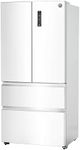
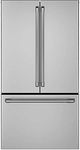
Buying Guide for the Best Counter Depth French Door Refrigerators
Choosing the right counter-depth French door refrigerator involves understanding your needs and the key specifications that will ensure the appliance fits seamlessly into your kitchen while meeting your storage requirements. Counter-depth refrigerators are designed to align with the edge of your countertops, providing a sleek, built-in look without the need for custom cabinetry. French door models offer the convenience of wide shelves and easy access to fresh food items. Here’s how to navigate the key specs to find the best fit for you.CapacityCapacity refers to the total storage space available inside the refrigerator, measured in cubic feet. This is important because it determines how much food you can store. Typically, capacities range from 20 to 25 cubic feet for counter-depth models. If you have a large family or entertain often, you might need a larger capacity. For smaller households or those who shop more frequently, a smaller capacity may suffice.
DimensionsDimensions are the physical measurements of the refrigerator, including height, width, and depth. This spec is crucial to ensure the appliance fits into your kitchen space. Measure the area where you plan to place the refrigerator, including the doorways and pathways to get it there. Standard widths for counter-depth models are usually between 30 to 36 inches. Make sure to leave some extra space for ventilation.
Energy EfficiencyEnergy efficiency indicates how much electricity the refrigerator uses, often reflected in the Energy Star rating. This is important for reducing your utility bills and minimizing your environmental footprint. Look for models with higher energy efficiency ratings. The more stars or the lower the annual energy consumption (measured in kWh), the better.
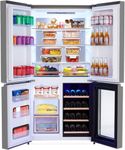
Shelving and Storage OptionsShelving and storage options refer to the design and flexibility of the shelves, drawers, and door bins inside the refrigerator. This is important for organizing your food and maximizing space. Adjustable shelves, split shelves, and specialized drawers (like deli or crisper drawers) can help you customize the interior to fit your needs. Consider what types of food you store most often and choose a model that offers the best configuration for those items.
Temperature ControlTemperature control refers to the ability to set and maintain specific temperatures in different sections of the refrigerator. This is important for keeping your food fresh and safe. Look for models with precise digital controls and separate zones for the fridge and freezer. Some advanced models offer dual or triple cooling systems for better temperature management.
Ice and Water DispenserAn ice and water dispenser provides convenient access to filtered water and ice without opening the refrigerator door. This feature is important for those who value convenience and hydration. Consider whether you want an external dispenser (on the door) or an internal one (inside the fridge). External dispensers are more convenient but can take up door storage space.
Noise LevelNoise level refers to how loud the refrigerator operates, usually measured in decibels (dB). This is important if your kitchen is close to living areas or if you are sensitive to noise. Quieter models typically operate at around 40 dB or lower. If noise is a concern, look for models specifically designed to run quietly.
Finish and DesignFinish and design refer to the exterior look and material of the refrigerator, such as stainless steel, black stainless, or custom panel-ready. This is important for matching the appliance with your kitchen decor. Choose a finish that complements your kitchen style and is easy to clean. Fingerprint-resistant finishes are a popular choice for households with children.