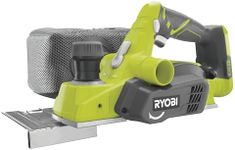
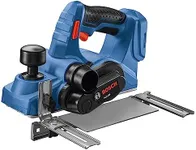
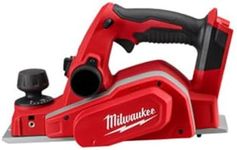
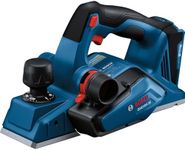
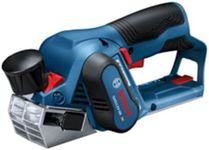
Buying Guide for the Best Cordless Planers
Choosing the right cordless planer can make your woodworking projects much easier and more efficient. A cordless planer is a versatile tool that allows you to smooth and level wood surfaces without the hassle of a power cord. When selecting a cordless planer, it's important to consider several key specifications to ensure you get the best fit for your needs. Understanding these specs will help you make an informed decision and find a planer that suits your specific requirements.Battery VoltageBattery voltage determines the power of the cordless planer. Higher voltage batteries (18V or 20V) provide more power and are suitable for heavy-duty tasks, while lower voltage batteries (12V) are lighter and more suitable for light to medium tasks. If you plan to use the planer for extensive or tough jobs, opt for a higher voltage. For occasional or lighter use, a lower voltage may suffice.
Battery Capacity (Ah)Battery capacity, measured in ampere-hours (Ah), indicates how long the battery will last on a single charge. Higher capacity batteries (4Ah or more) will run longer, which is beneficial for extended use without frequent recharging. Lower capacity batteries (2Ah or less) are lighter and may be sufficient for shorter tasks. Choose a higher capacity if you need longer runtime, especially for larger projects.
Planing WidthPlaning width refers to the maximum width of the wood that the planer can handle in one pass. Common widths are around 3-1/4 inches. A wider planing width allows you to cover more surface area quickly, which is useful for larger pieces of wood. If you often work with wide boards, a planer with a larger planing width will be more efficient. For smaller or more detailed work, a standard width should be adequate.
Planing DepthPlaning depth is the maximum amount of material the planer can remove in a single pass. This is usually adjustable and can range from 1/16 inch to 1/8 inch or more. Deeper planing depths allow for faster material removal, which is useful for rough work. For finer, more precise work, a shallower depth is preferable. Consider the type of projects you will be doing to determine the appropriate planing depth.
WeightThe weight of the cordless planer affects its portability and ease of use. Lighter planers (around 6-7 pounds) are easier to handle and maneuver, especially for extended periods. Heavier planers (8 pounds or more) may offer more stability and power but can be tiring to use for long durations. If you need to move around a lot or work overhead, a lighter model may be more suitable. For stationary or heavy-duty work, a heavier planer might be better.
Blade Type and QualityThe type and quality of the blades determine the finish and efficiency of the planing. High-speed steel (HSS) blades are common and provide a good balance of durability and sharpness. Carbide blades are more durable and stay sharp longer but can be more expensive. If you need a high-quality finish and plan to use the planer frequently, investing in carbide blades may be worthwhile. For occasional use, HSS blades should be sufficient.
Dust CollectionDust collection is an important feature that helps keep your workspace clean and reduces the amount of airborne dust. Some cordless planers come with built-in dust bags or ports for connecting to a vacuum. Effective dust collection is crucial for maintaining a clean work environment and ensuring better visibility while working. If you work indoors or in a small space, prioritize a model with good dust collection capabilities.