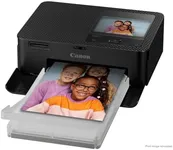
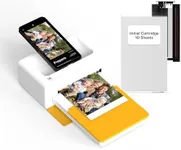
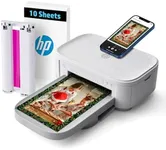
Buying Guide for the Best Compact Photo Printers For Home Use
Choosing the right compact photo printer for home use can be a rewarding experience, allowing you to print high-quality photos conveniently from the comfort of your home. To make an informed decision, it's important to understand the key specifications and how they align with your needs. Here are the main factors to consider when selecting a compact photo printer.Print QualityPrint quality is determined by the printer's resolution, measured in dots per inch (DPI). Higher DPI values generally mean better print quality, with more detail and sharper images. For home use, a printer with at least 300 DPI is usually sufficient for standard photo prints. If you want professional-grade prints, look for printers with 600 DPI or higher. Consider what level of detail you need in your photos to choose the right DPI for you.
Print SizePrint size refers to the maximum dimensions of the photos the printer can produce. Common sizes include 4x6 inches, 5x7 inches, and 8x10 inches. If you primarily want to print standard photo sizes like 4x6 inches, most compact photo printers will meet your needs. However, if you want to print larger photos, ensure the printer supports those sizes. Think about the typical photo sizes you plan to print and choose a printer that accommodates those dimensions.
Connectivity OptionsConnectivity options determine how you can send photos to the printer. Common options include USB, Wi-Fi, Bluetooth, and memory card slots. Wi-Fi and Bluetooth allow for wireless printing from smartphones, tablets, and computers, offering greater convenience. USB connections are reliable for direct printing from a computer. Memory card slots enable printing directly from your camera's memory card. Consider how you prefer to transfer photos to the printer and choose a model with the appropriate connectivity options.
Print SpeedPrint speed indicates how quickly the printer can produce a photo, usually measured in seconds per print. Faster print speeds are beneficial if you plan to print a large number of photos in a short time. For occasional home use, a print speed of around 40-60 seconds per 4x6 photo is generally acceptable. If you need to print photos more frequently or in larger batches, look for a printer with faster speeds. Assess your printing habits to determine the importance of print speed for you.
Ink and Paper CompatibilityInk and paper compatibility refers to the types of ink cartridges and photo paper the printer can use. Some printers use dye-sublimation technology, while others use inkjet. Dye-sublimation printers often produce more durable and vibrant prints, but the consumables can be more expensive. Inkjet printers offer more flexibility with different paper types and sizes. Check the availability and cost of compatible ink and paper for the printer you are considering. Think about your preference for print quality and cost-effectiveness when choosing between dye-sublimation and inkjet printers.
PortabilityPortability is an important factor if you plan to move the printer around or take it with you on trips. Compact photo printers vary in size and weight, with some being small enough to fit in a bag. Look for a lightweight and compact design if portability is a priority for you. Consider how often you will need to transport the printer and choose a model that is easy to carry and set up.
Additional FeaturesAdditional features can enhance the functionality and convenience of a photo printer. These may include built-in editing tools, touchscreens, battery operation, and mobile app compatibility. Built-in editing tools allow you to make quick adjustments to your photos before printing. Touchscreens can simplify navigation and operation. Battery operation is useful for printing on the go without needing a power outlet. Mobile app compatibility can provide more control and options for printing from your smartphone. Think about which additional features would be most beneficial for your use case and look for printers that offer them.